The most valuable technologies of the next decade will come from science and engineering
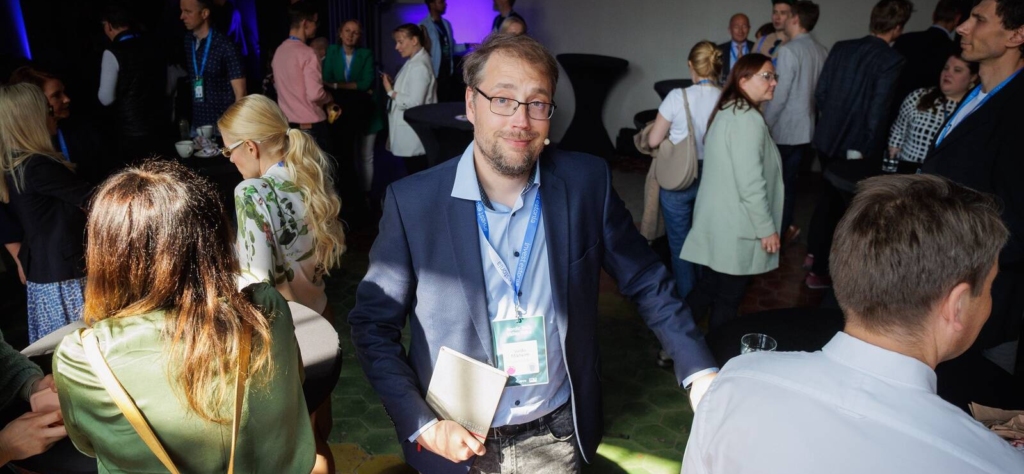
In May, DeepTech Drinks & Showcase took place in Tartu, bringing together Estonian researchers, technology entrepreneurs, investors and deep tech enthusiasts. The aim of the event was to build stronger connections between science and capital, and to discuss how Estonia could create more technology companies with global impact in the years ahead.
The event brought together researchers and technology enthusiasts from the University of Tartu, TalTech and the Estonian University of Life Sciences. Its format was deliberately content-focused, yet informal, so participants presented their research and technology projects through posters, discussed possible real-world applications and received feedback from investors and people with business-building experience.
Mart Maasik, partner at Nordic Science Investments, said the idea behind DeepTech Drinks & Showcase was to create a new kind of meeting format in Estonia. The aim was to give teams working on applied research a place to present their progress, learn from one another and receive feedback from investors even before they are ready to raise investment. “There is a clear need for this kind of gathering in Estonia. Events like this play an important role in helping more Estonian science reach the world as international deep tech companies over the next decade,” said Maasik.
Veljo Otsason, partner at Superangel, an Estonia-based venture capital fund focused on deep tech, said investors are looking for promising research teams at Estonian universities. “Our universities have a very strong scientific base, and Estonian research is internationally competitive. I am convinced that many of the most valuable technologies of the next decade will be born within universities, from science and engineering,” said Otsason.
According to Maasik, an important shift has taken place in recent years. Estonia has become better at attracting European funding for basic research, but funding for applied research has also grown strongly, both in volume and in the number of projects supported. Researchers are also increasingly ambitious about bringing the results of their work into practical use, while investors are more willing to back companies built on science and technology.
For example, Superangel has already invested in several companies with a strong scientific and technological background, including DeepTech startups that have grown out of the University of Tartu as well as other universities in Estonia and abroad. In addition, more than 70 research teams received support last year through different funding measures.
Maasik noted that Estonia is now taking a more systematic approach than ever before to unlocking the potential of science-based innovation. At the same time, he stressed that funding alone is not enough to turn science into societal or economic impact. “Early contact with entrepreneurs, investors and people who have already gone through a similar journey helps research groups move faster. Sharing experience helps avoid many pitfalls that are not obvious at first,” he added.
Investors at the event emphasised that the link between science and capital needs to be stronger and needs to form earlier. Their interest lies in helping researchers and technical teams reach the point where their work can grow into an internationally scalable company.
In many cases, investors are in contact with founders for months, or even years, before the team actually sets up a startup, becomes investment-ready and closes its first deal. “Researchers should not wait for the perfect idea before talking to investors. Investors like discussing ideas early and, where possible, giving advice. For us, what matters most is a strong technological advantage and the ability to build a global company on top of it,” said Otsason.
Teams developing deep tech are also not expected to have sales figures or a detailed business plan at the very beginning. “What we do want, however, is a clear understanding of what makes the technology unique and what kind of market need it could address,” Otsason added.
How to move from science to business?
One of the main messages from the event was that, at the start of the journey, finding like-minded people is crucial. It is also worth discussing ideas with as many people as possible outside the usual academic circle, for example, with other startup founders, investors, potential customers and partners.
Early feedback often helps teams better understand which application area has the greatest potential, who the first customer or market could be, and what is needed to turn research into a startup.
Andi Hektor, founder of MuRayTech, also shared his experience, speaking through practical examples about his journey from researcher to entrepreneur.
According to Hektor, the academic world can sometimes feel even lonelier than entrepreneurship, because a deep tech company is not built alone. “You need at least one really good co-founder with whom you can share all the worries and all the wins,” Hektor said.
At some point, every research team also needs to figure out how to fund the transition from science to entrepreneurship. Hektor recommended using grants and research funding before becoming a full-time entrepreneur and raising the first investment. He also advised speaking with investors as early as possible. “The investor perspective helps develop the idea, the market and possible applications much faster,” he said.
Researchers were also interested in how a new company can find its first customers. The key recommendation was to start by building relationships and trust. “The first customers are often not typical customers, but rather partners with whom you develop both the product and the business model. That is why, in the beginning, it is better not to think in terms of classic sales, but rather in terms of trust, long-term relationships and good cooperation,” said Andi Hektor.
Marina Bachmann
Public Relations Consultant