The first half of 2024 for the Estonian startup sector: adapting to change
Despite global economic turbulence and ever-changing market landscapes, Estonian startups aren’t just staying afloat, they’re crafting jetpacks. So buckle up and get ready for a deep dive into the Estonia’s startup scene in 2024 – where the data are refined, trends are taking shape and the insights are eye-opening!
“Estonia’s startup industry has never stopped growing, even though the rest of the economy has stagnated for over two years. 2023 and early 2024 were challenging times for startups, as they were affected by the worldwide funding crunch, and growth rates slowed from 30-70% to 10-12% per annum. Now, we are gaining speed again. Growth accelerated in Q2, and many tech companies have reached breakeven or profitability. Almost 200 companies are fundraising, and investor optimism is high. One of the most notable trends of 2024 is the emerging defense tech cluster.”
Allan Martinson, President of the Estonian Founders Society
Over the last six months we’ve been diligently updating and refining our data in Dealroom. While there’s still work to be done, the results are encouraging. Our focus remains on data accuracy and expanding their scope to include growth companies, offering valuable insights into the entire lifecycle of startup-sector companies in Estonia.
Keen-eyed readers might notice certain divergences from earlier reports. These differences reflect our ongoing efforts to update and refine Dealroom. As we continue to improve our data, 2024 is serving as a pilot year to enhance report accuracy, ensuring as precise a representation of economic performance as possible.
Employment
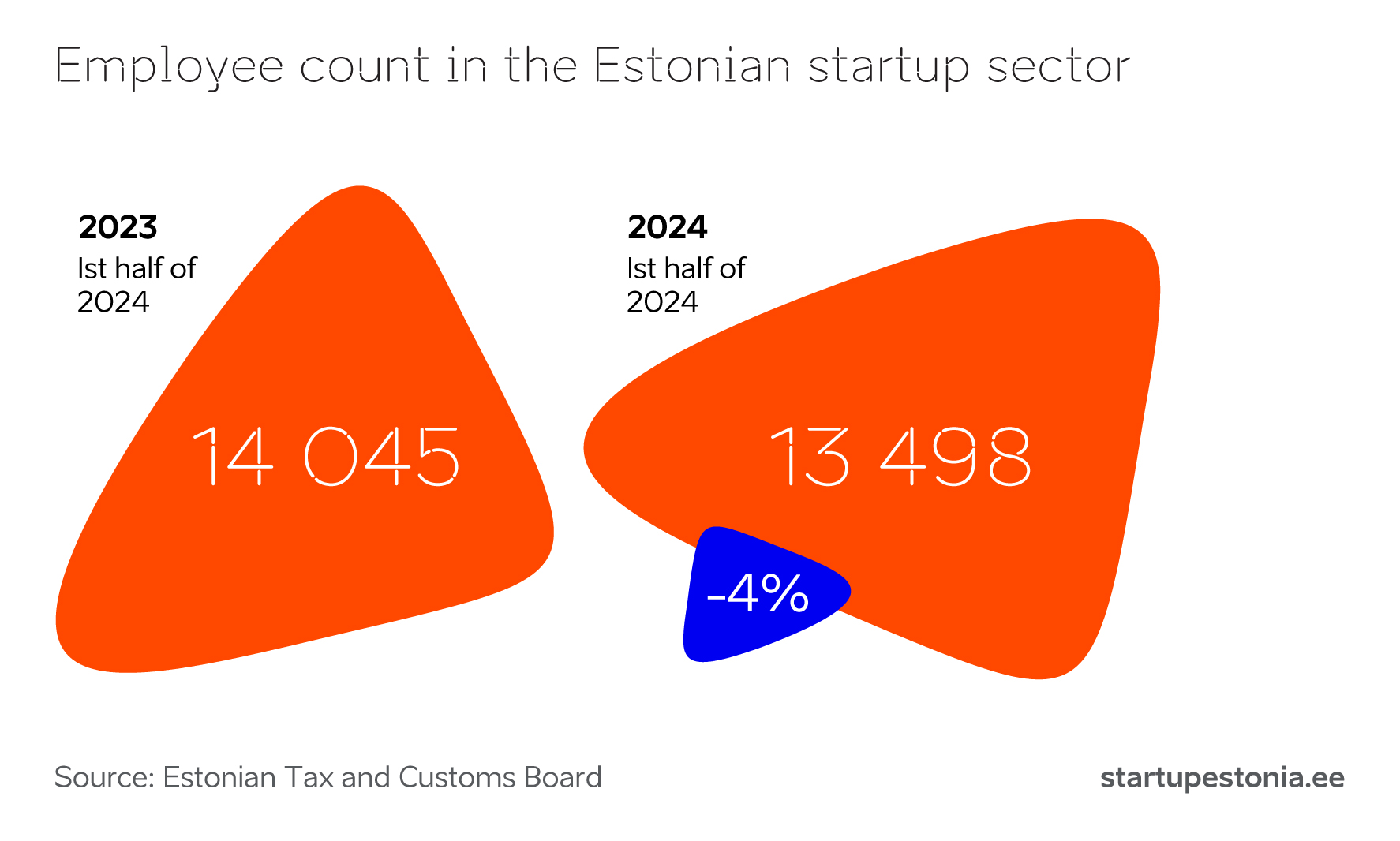
Statistics from the Estonian Tax and Customs Board show that at the end of Q2 2024, Estonia’s startup-sector companies employed locally 13,498 people. A year ago, that employee count stood at 14,045, representing a decrease of 4%. However, the figures remain largely unchanged from the end of 2023. While it’s encouraging to see stability in the startup sector’s employment numbers in recent months, it’s too early to determine whether this trend signifies stabilization or if further workforce reductions will be necessary. The coming months will be crucial for understanding the full impact of the current economic landscape on employment.
If we look at the total number of employees who have worked in startup-sector companies for at least one day in 2024, that number is even higher. According to Statistics Estonia, 16,164 people have worked for Estonia’s startup-sector companies in the last six months. And if we look at all the people in the country who worked at least one day in the first half of 2024, we see that every 43rd person in Estonia was somehow involved in the sector!
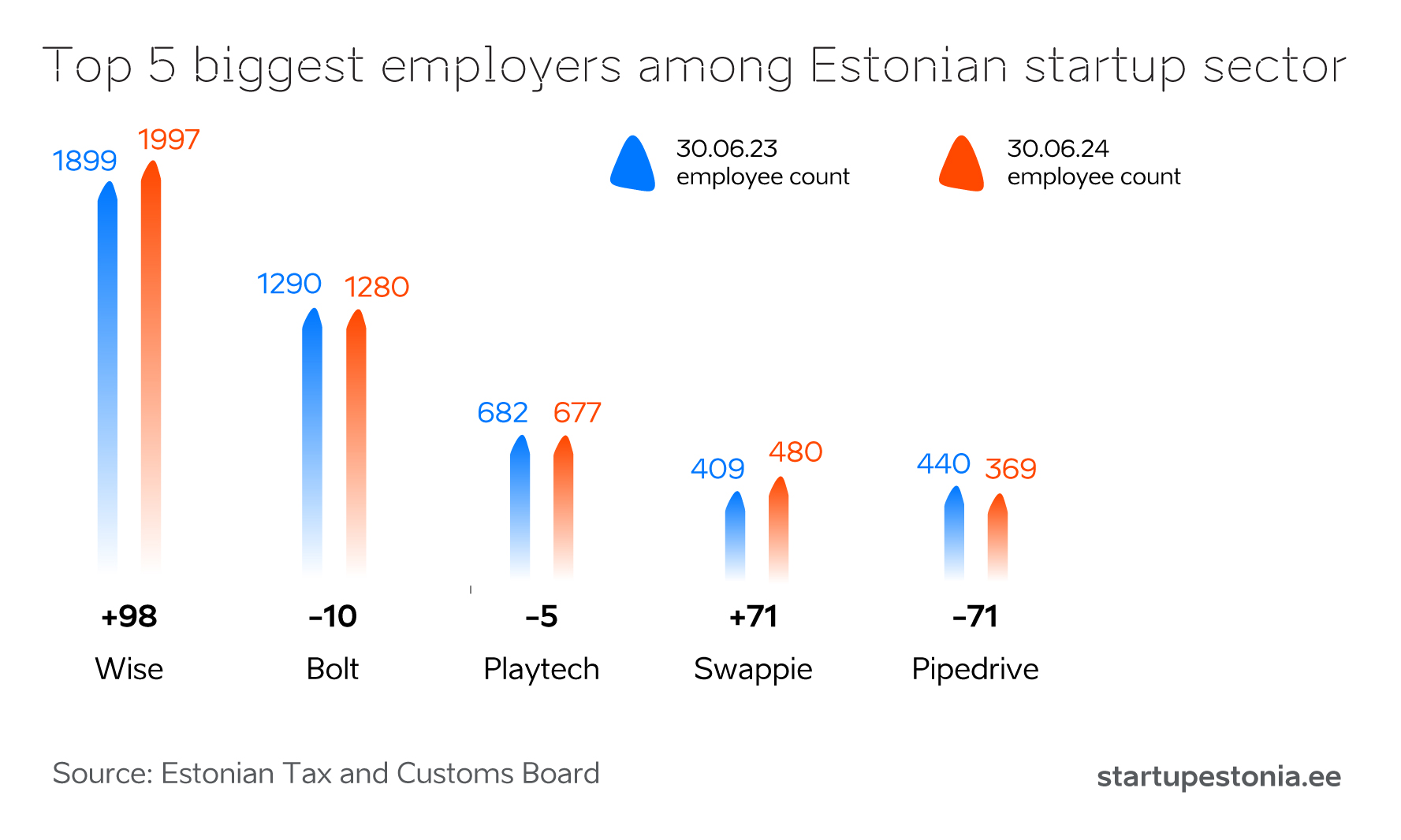
According to the Estonian Tax and Customs Board, the top 10 startup-sector companies in Estonia account for a remarkable 44% of the new jobs created in the first half of the year. The leading employers are Wise (with 1997 employees and 98 new hires compared to the same period last year), Bolt (1280 employees), Playtech (677 employees), Swappie (480 employees) and Pipedrive (369 employees). Besides being the top employers in the sector, Wise, Bolt and Pipedrive are among the 10 most attractive companies to economics, management, natural sciences and technical students in Estonia according to a Kantar Emor employer reputation study.
Demographics of the Estonian sector
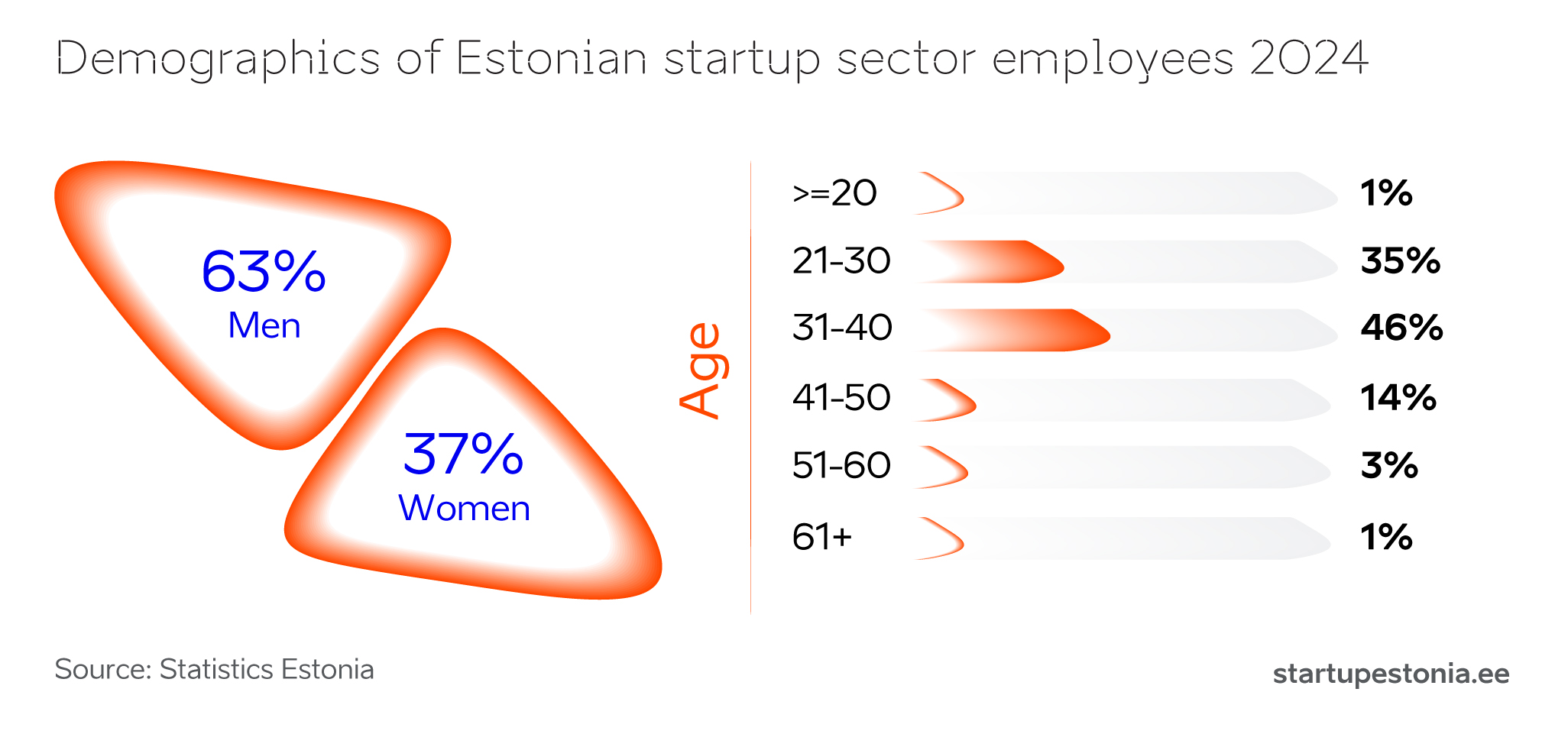
A closer look at the demographics of startup sector employees shows that the trends are similar to previous years: 37% of employees are women and 63% are men. Approximately 32% of the employees have foreign citizenship (5.3% with EU citizenship and 26.9% from non-EU countries). This highlights the importance of bringing in foreign talent with diverse skills and perspectives that drive innovation and growth in the startup ecosystem.
A few years ago, the majority of employees fell into the 21-30 age bracket. Today, the largest group of employees (46%) is in the 31-40 bracket, followed by 35% in the 21-30 bracket.
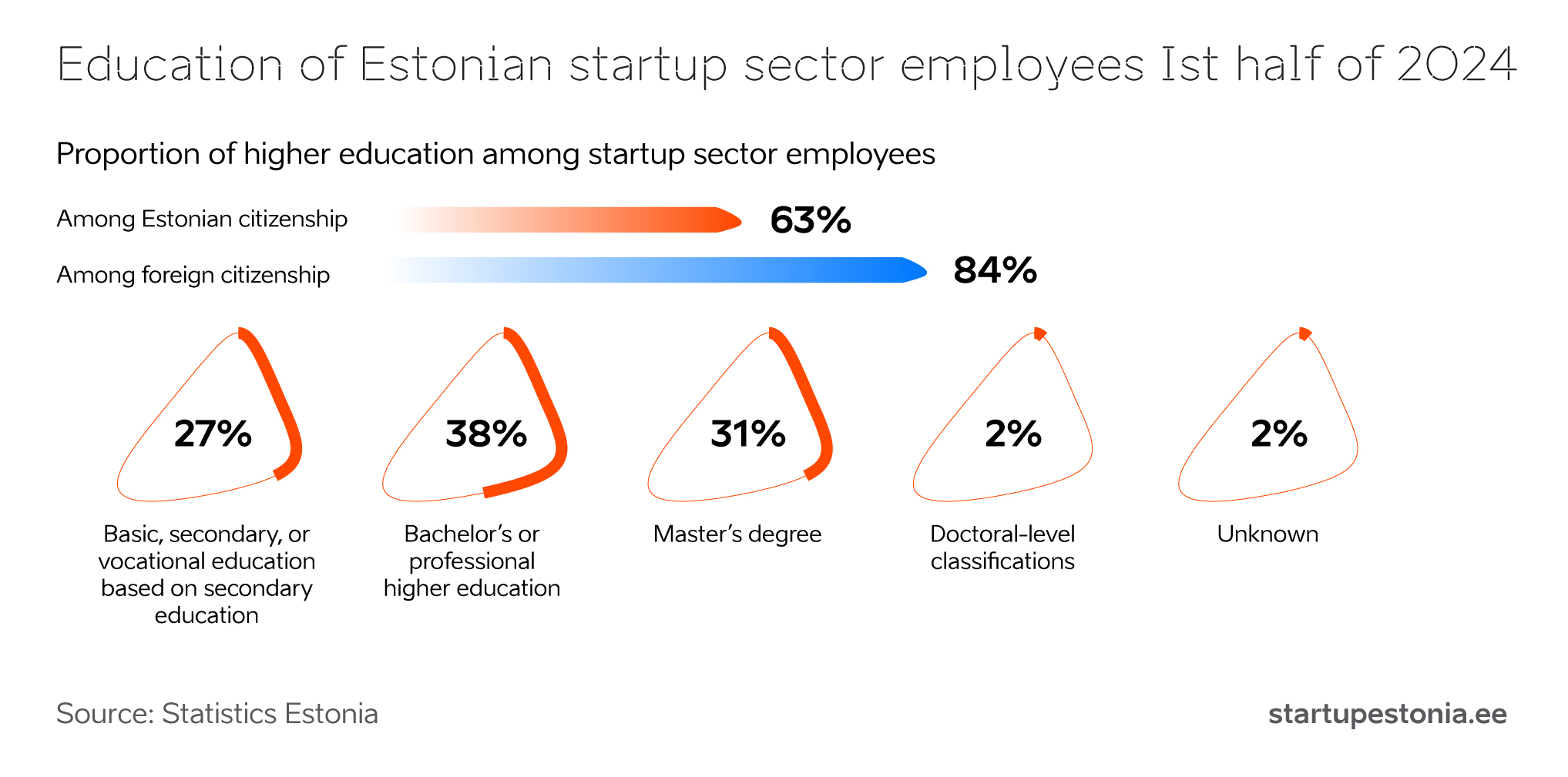
Statistics also show that 69% of employees have higher education (a Bachelor’s, Master’s or doctoral degree) and 27% have general education or vocational education based on secondary education. The proportion of higher education among foreign employees in Estonia’s startup-sector companies is even higher: 84%.
Startup founders
The average age of startup founders is 39. Most of them (60%) have higher education (including professional higher education and Bachelor’s, Master’s or doctoral degrees). Additionally, female founders generally have a higher level of education, with 78% of women and 57% of men having undertaken tertiary studies. We also see that the proportion of female founders in the sector has not changed much, remaining at around 16%.
Employment taxes and salaries
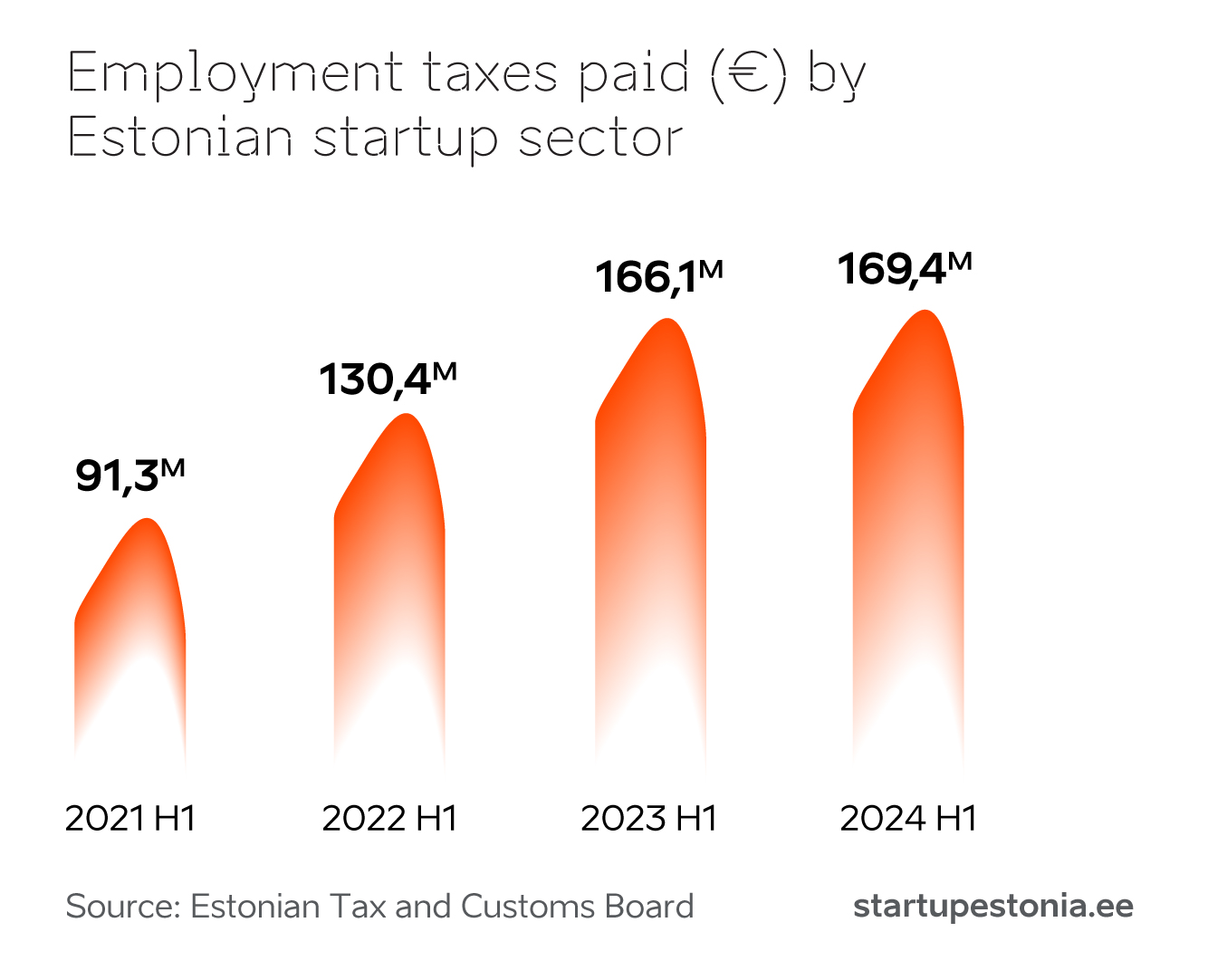
Based on statistics from the Estonian Tax and Customs Board, there has been slight growth in employment taxes paid. At the end of the first half of 2023, total employment tax was 166.1 M EUR. By the end of the first half of 2024 it had risen to 169.4 M EUR, representing year-on-year growth of 2%.
The largest contributors in the startup sector in the first half of 2024 were Bolt (20.1 M EUR), Wise (18 M EUR), Pipedrive (8.3 M EUR), Playtech (8.1 M EUR) and Twilio (4 M EUR).
According to Statistics Estonia, during the first six months of 2024 the average monthly gross salary in Estonian startup-sector companies was 3609 EUR, which is 1.97 times higher than the Estonian average, reflecting the competitive compensation offered to attract and retain talent. Employees in the 41-50 age bracket earn the highest average monthly gross wage (4462 EUR) followed by employees in the 31-40 bracket, whose average monthly gross wage is 3912 EUR. The average monthly gross wage for foreign employees is 3739 EUR.
Turnover
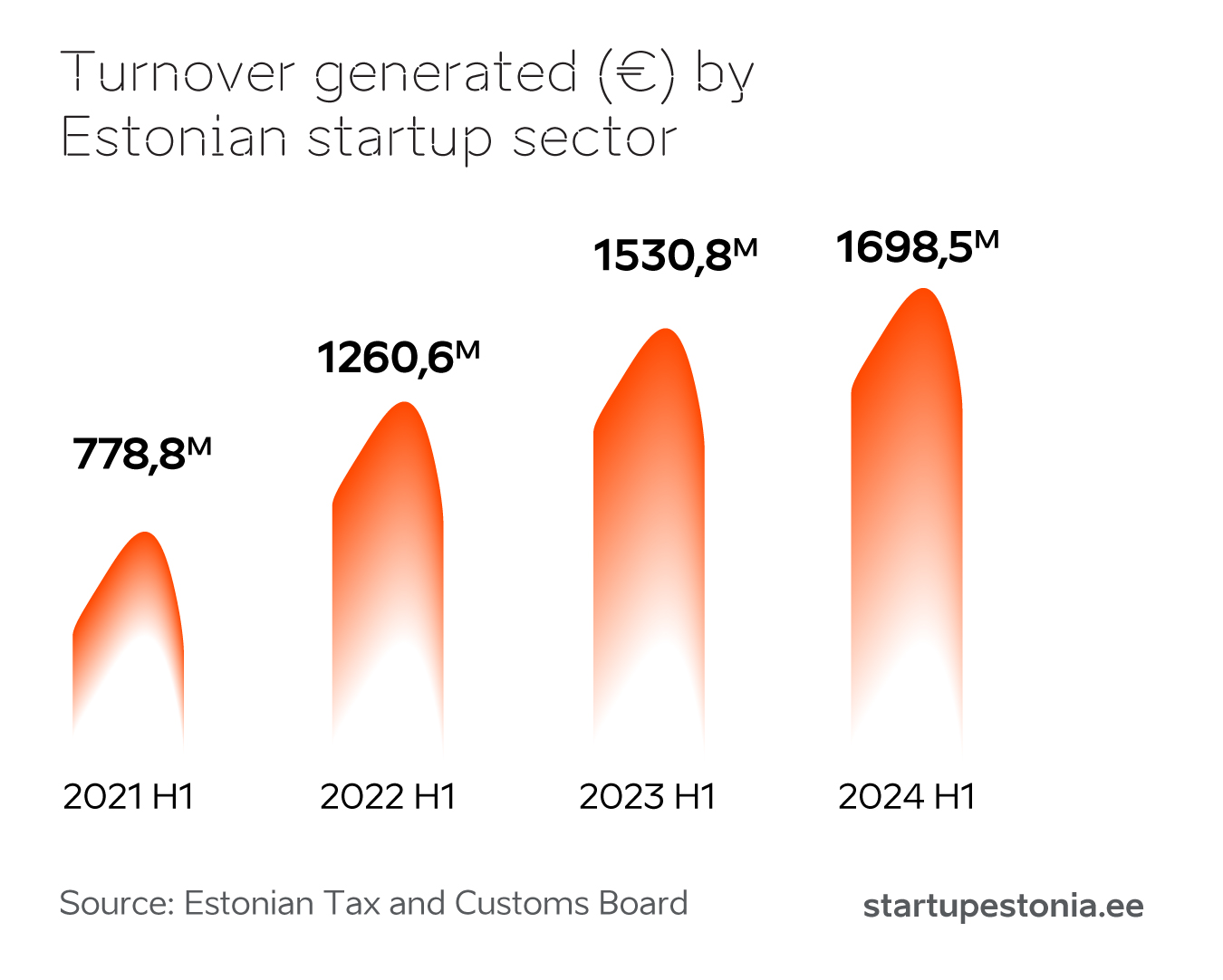
Based on quarterly data from the Estonian Tax and Customs Board, companies in the startup sector posted turnover of 1.698 billion EUR in the first half of 2024, which is an 11% increase on the same period in 2023 (1.530 billion EUR). At the same time, the total turnover of all taxpayers in Estonia decreased by 4% during this period. This contrast highlights the resilience of Estonia’s startup sector, even in the face of broader economic challenges.
Among companies, the largest turnover was generated by Bolt (618.3 M EUR), followed by Pipedrive (130.8 M EUR), Veriff (59.1 M EUR), Defsecintel (25.7 M EUR) and Playtech (24.3 M EUR). Moreover, the total turnover of the top 10 companies accounted for 57% of the turnover of the entire sector in the first half of 2024.
“The increasingly complex security situation in Europe has heightened the demand for modern and battle-proven equipment and solutions that ensure the security of national borders and facilitate the detection of malicious drones. Our AI-powered devices and software enable clients to achieve this in a novel and efficient manner.”
Jaanus Tamm, CEO of DefSecIntel
Please note that turnover data are published based on the quarterly data from the Estonian Tax and Customs Board and are therefore not comparable to data from companies’ annual reports.
Investments and acquisitions
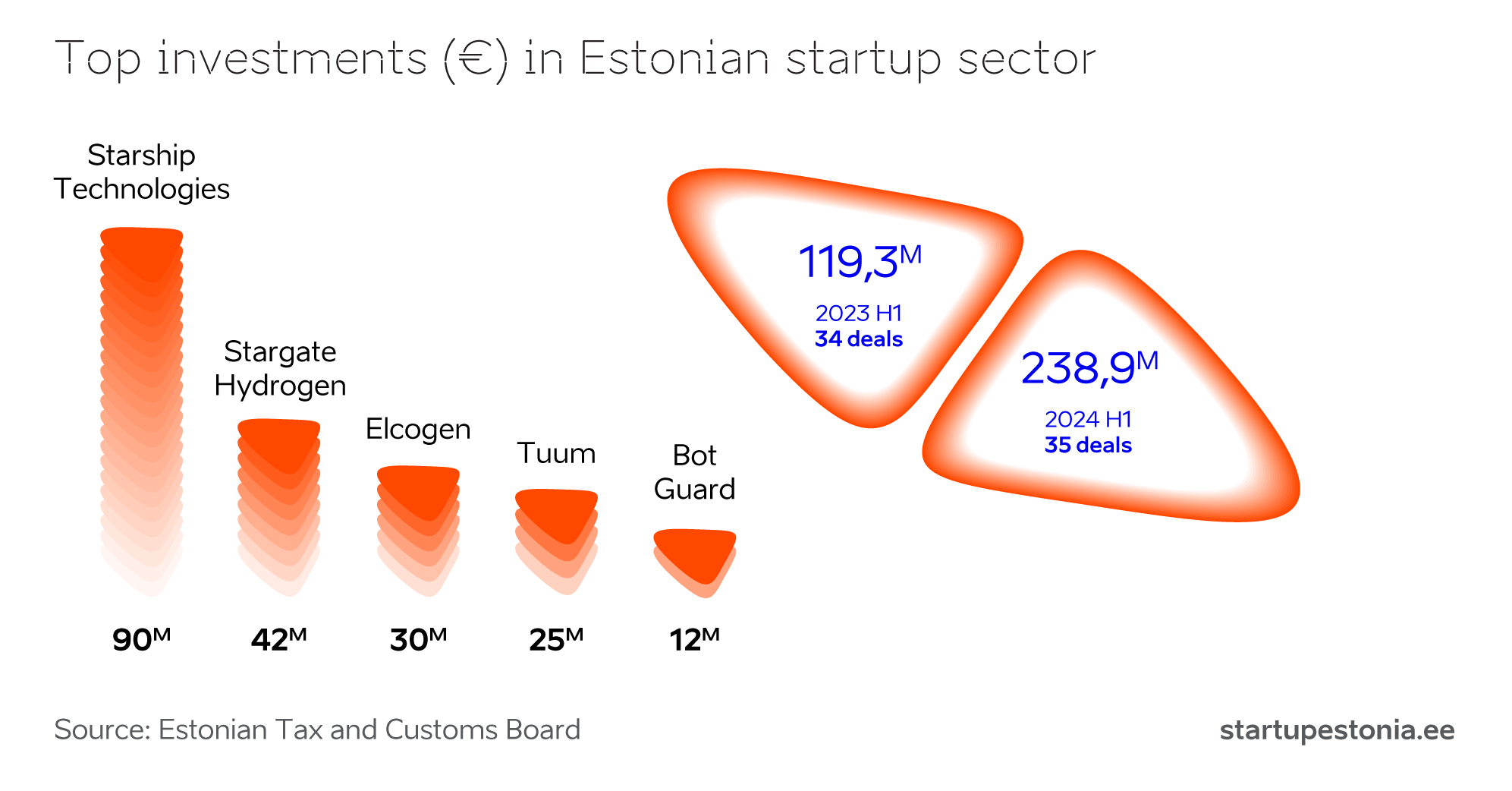
Based on the crowdsourced table, a total of 238.9 M EUR was invested in Estonia’s startup sector in the first half of 2024, with 35 new investment deals and 17 deals valued at 1 M EUR or more. In the first half of the previous year there were 34 new investment deals, totalling 119.3 M EUR.
The biggest investments in the first half of 2024 were raised by Starship Technologies (90 M EUR), Stargate Hydrogen (42 M EUR), Elcogen (30 M EUR), Tuum (25 M EUR), Bot Guard (12 M EUR), Bisly (6.2 M EUR), Eleport (5 M ERU), Sensus Q (3.8 M EUR), Planet 42 (3 M EUR) and GScan (3 M EUR).
In the first half of 2024, investments in Estonia’s startup landscape were notably concentrated in the energy, fintech, security and food sectors. This trend, identified by Dealroom’s heatmap, underscores the growing interest and financial backing in these areas and reflects evolving market demands and innovation priorities in the Estonian tech ecosystem. According to the Shape of the New Nordics 2023 survey, early-stage investments in the New Nordic region were primarily directed towards the energy, climate and fintech sectors. This trend was confirmed by the Baltic Deep Tech Report 2024, which highlighted that the most funded fields in the Baltic States in 2023 were enterprise software, energy and security. Additionally, the State of Gender Diversity in European Venture 2024 report indicates that the most funded sectors in Europe were health, fintech and food. As such, the first half of 2024 continues to build on the sectoral investment trends of 2023, with an ongoing emphasis on innovation and growth in the aforementioned areas.
So far this year we’ve already seen acquisitions in the ecosystem. In January, Klaus, an AI-powered quality management platform, was acquired by Zendesk. In April, Arf, a global settlement banking platform, merged with Huma Finance, and in the same month the French cybersecurity company group Neverhack acquired full ownership of Security Software OÜ, operating under the Cybers brand in Estonia. In June, Up Group, the leading provider of employee benefits services in France, acquired a controlling stake in Stebby, and in July the German digital tax filing platform Taxfix purchased TaxScouts.
Estonian Startup Visa
In the first half of 2024, companies founded using the Estonian Startup Visa paid 1.6 M EUR in employment taxes (+30% compared to the same period in 2023), employed around 140 people in Estonia (-2%) and raised their turnover to 34.9 M EUR (+28%). Taking into account the economic indicators of companies whose Startup Status has expired, the impact is significantly greater. As of June 30, 2024, companies with expired Startup Status employed 266 people and had a turnover of 28.7 M EUR in the first half of 2024, and paid 3.9 M EUR in employment taxes.
According to Statistics Estonia, 84% of the employees of these companies have higher education (professional higher education or a Bachelor’s, Master’s or doctoral degree). The majority of employees work in managerial positions (40%) and high-level professional positions (including 37% in ICT).
In addition, companies operating in Estonia can apply for a visa designed to hire talent from outside of the EU. The businesses that utilized this visa for talent acquisition had a turnover of 865.2 M EUR in the first half of the year, paid 55.2 M EUR in employment taxes and employed 3616 employees as of June 30, 2024. Furthermore, since the beginning of last year it has been possible to hire talent from outside of the EU for companies that meet the definition of a scaleup visa. According to the Aliens Act, these are companies that have been operating for at least 10 years, employ at least 50 people in Estonia, have paid at least 1 M EUR in employment taxes in the last year and have seen cumulative growth in employment taxes of 20% over the last three years. In the first half of the year, scaleup visa companies had a turnover of 238.2 M EUR, paid 55.8 M EUR in employment taxes and employed 4682 people as of June 30, 2024. While not all of these results can be directly attributed to the visa, this provides an indication that the actual impact of the startup visa is significantly greater.
Svetlana Minina, Finance Director, Wise:
“Wise is a global technology company with Estonian roots, and Tallinn is home to our largest office, where over 2000 people representing more than 90 different nationalities are building money without borders. For us to be able to develop and offer our world-class products to our global customers, we need an international team representing diverse skills, knowledge and experience working on them. This means that we also need to hire from third countries, which today is supported by the Scaleup Visa. We are seeing the clear positive impact of the Startup and Scaleup Visa mechanisms on the development of the Estonian technology sector and in maintaining the country’s competitiveness on the innovation front. At Wise, we’re happy that we can grow and progress with our mission here in Estonia, and contribute through our activities to the local economy.”
DeepTech companies in the startup sector
DeepTech companies in the startup sector paid 27.1 M EUR in employment taxes, generated 160.4 M EUR in turnover and employed 2212 persons, about 16% of all sector employees at the end of the first half of 2024. At the same time, we can see that the number of employees in DeepTech companies was 6% lower in the first half of the year than in the same period in 2023.
Among DeepTech companies, the largest turnover was generated by Defsecintel (25.7 M EUR), followed by Threod Systems (22.8 M EUR) and Cleveron (14.6 M EUR). Milrem is the largest employer (with 231 employees) and payer of employment taxes (2.8 M EUR) in the sector.
In the first half of the year, DeepTech companies raised 171.8 M EUR (72% of sector investments) across 14 deals. There were seven deals worth 1 M EUR or more: Starship Technologies (90 M EUR), Stargate Hydrogen (42 M EUR), Elcogen (30 M EUR), GScan (3 M EUR), 10lines (1.5 M EUR), Nanordica (1.1 M EUR) and Kingdom Technologies (1 M EUR). These figures highlight the significant contributions and investment potential of DeepTech companies within the startup ecosystem.
Conclusion
The first half of 2024 has shown that Estonia’s startup sector remains robust and adaptive despite global economic challenges. Employment in the sector has remained stable and the demographic composition continues to reflect a healthy diversity of local and international talent. The financial contributions from these startups, in terms of taxes and turnover, have demonstrated [small and] steady growth, further cementing their importance to the national economy. Investments and acquisitions indicate strong interest and confidence in the sector.
Author: Moonika Mällo
Sources: Startup Estonia, Statistics Estonia, Estonian Tax and Customs Board, Dealroom, Funding of Estonian Tech Startups #estonianmafia
Startup Estonia is a program under Enterprise Estonia that develops the Estonian startup ecosystem. The Startup Estonia program (project no. 2021-2027.1.03.23-0212) is financed from EU funds.