The first quarter of 2024 for the Estonian startup sector – a beacon of hope?
In November last year, we migrated our database to Dealroom. This platform provides us with a broader view of the ecosystem, allowing us to examine it more comprehensively than ever before. Previously, our focus was primarily on startups – companies with innovative and scalable business models, aged up to and including 10 years. However, with this new platform, we now have the capability to also monitor “matured” startups, scale-ups, and successful exits that continue their operations in Estonia (hereinafter indicated as growth companies). This expanded scope provides valuable insights into the entire lifecycle of companies within our ecosystem. By including established businesses and successful exits, we gain a deeper understanding of not just the early stages of entrepreneurship, but also the ongoing growth and evolution of companies as they mature. As we continue to track and analyze these developments, we can better support the sustained growth and success of Estonia’s entrepreneurial landscape. This new perspective reinforces our commitment to nurturing innovation and fostering a thriving business environment for companies at every stage of their journey. In our recent blog posts, keen-eyed readers might have noticed some discrepancies from earlier reports. These differences stem from our ongoing commitment to data accuracy and comparability. Throughout this year, we have been diligently updating and refining the companies list in Dealroom. This process ensures that the data we present is as precise and comprehensive as possible. However, such revisions also necessitated recalculating past results to maintain consistency and comparability. It’s important to note that 2024 serves as a pilot year for our efforts to enhance the accuracy of companies lists on the Estonian Startup ecosystem Dealroom platform. Our goal is to refine our methodologies and procedures to ensure that future reports provide the most accurate representation of economic performance.
Employment numbers and taxes
Statistics from the Estonian Tax and Customs Board reveal that as of the end of the first quarter of 2024, Estonian startup sector companies employed 13,229 people locally. The workforce continues to undergo a slight decrease, declining by 4% compared to the end of the first quarter of 2023 when the employee count stood at 13,830.
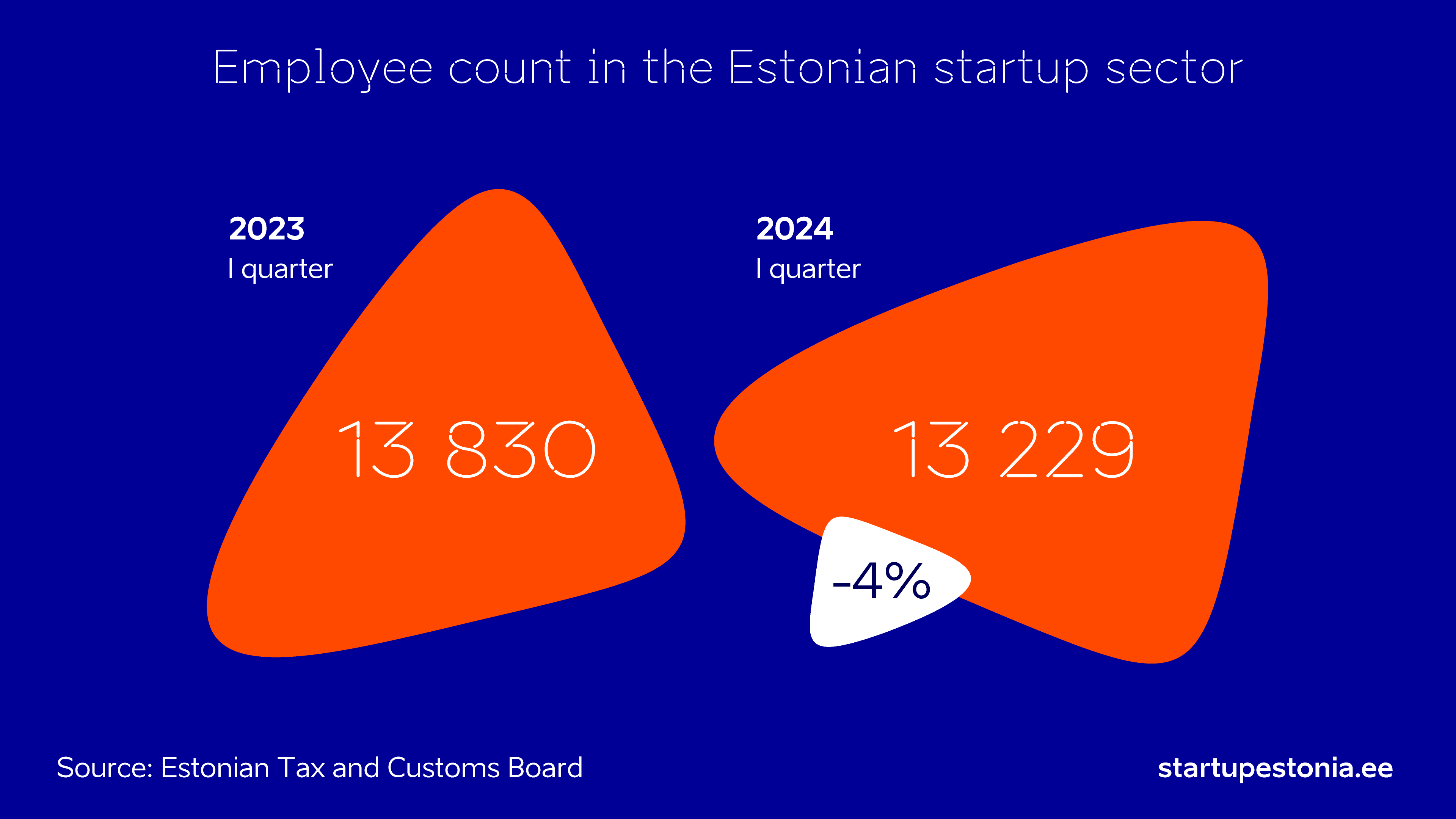
Of the total number of people employed in the sector at the end of Q1 2024, 44% were employed by the top 10 startup sector companies in Estonia. The leading employers include Wise with 1,948 employees, followed by Bolt with 1,278 employees, Playtech with 654 employees, Swappie with 470 employees, and Pipedrive with 387 employees.

Based on statistics from the Estonian Tax and Customs Board, there has been a slight growth in employment taxes paid, with the sum of employment tax contributions at the end of Q1 2024 amounting to 82.7 million EUR (+3% compared to Q1 2023 and +2% compared to Q4 2023). The top contributors of employment taxes among sector companies in Q1 were Bolt with 9.8 million EUR, Wise with 8.9 million EUR, Playtech with 4 million EUR, Pipedrive with 3.6 million EUR, and Coolbet with 2 million EUR.

Turnover, investments and exits
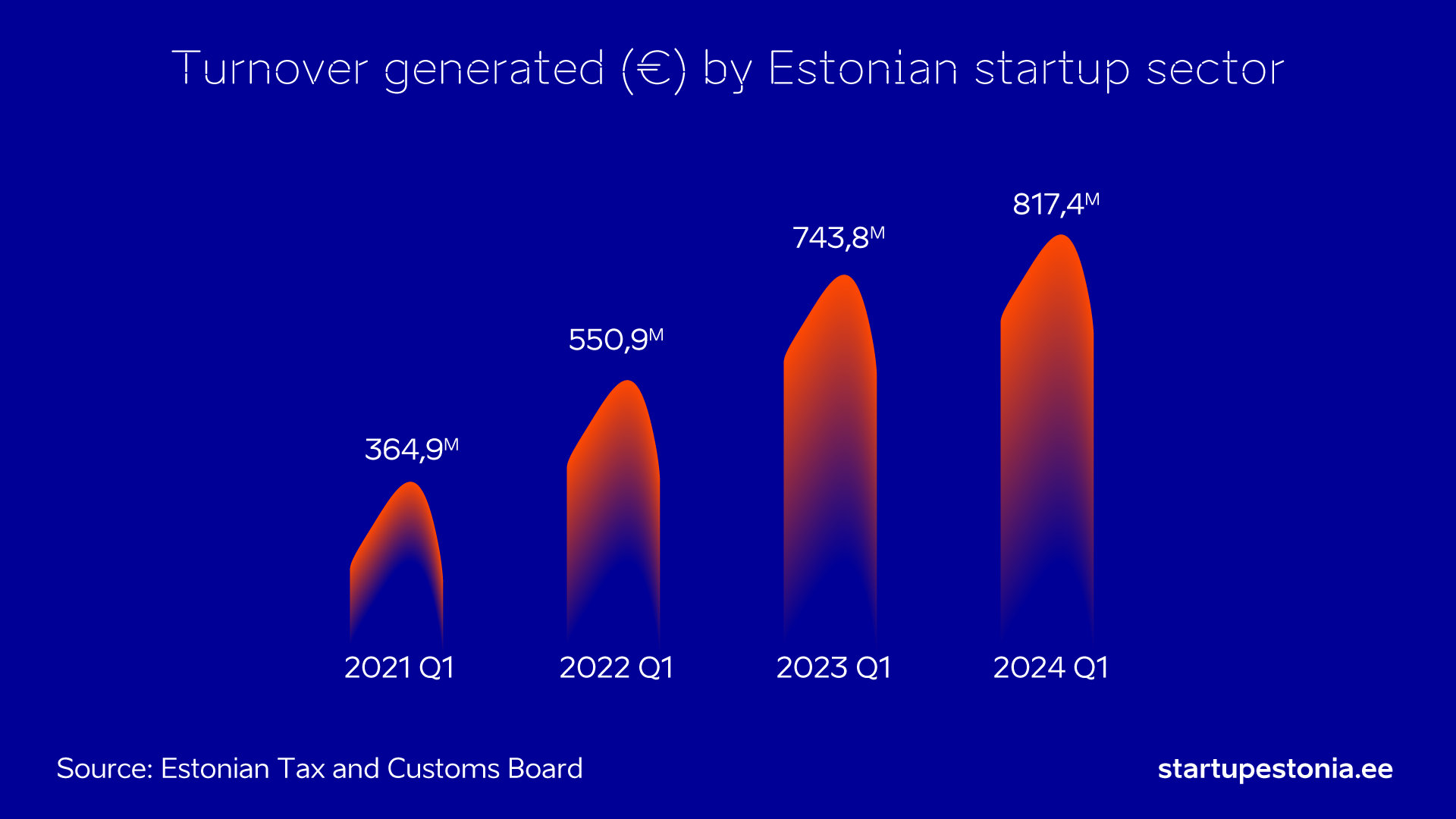
In the first quarter of 2024, Estonian startup sector companies generated 817.4 million EUR in turnover, marking a 10% increase compared to the same period in 2023 (743.8 million EUR). Among sector companies, the largest turnover was generated by Bolt with 289.8 million EUR (35% of sector turnover), followed by Pipedrive with 46.3 million EUR, Veriff with 41.9 million EUR, Defsecintel with 19.9 million EUR, and Threod Systems with 12.9 million EUR. Moreover, the total turnover of the top 10 companies accounted for 57% of the sector’s total turnover in the first quarter of 2024.
Please note that turnover data is published based on the quarterly data from the Estonian Tax and Customs Board and therefore is not comparable with companies’ financial year annual reports data.
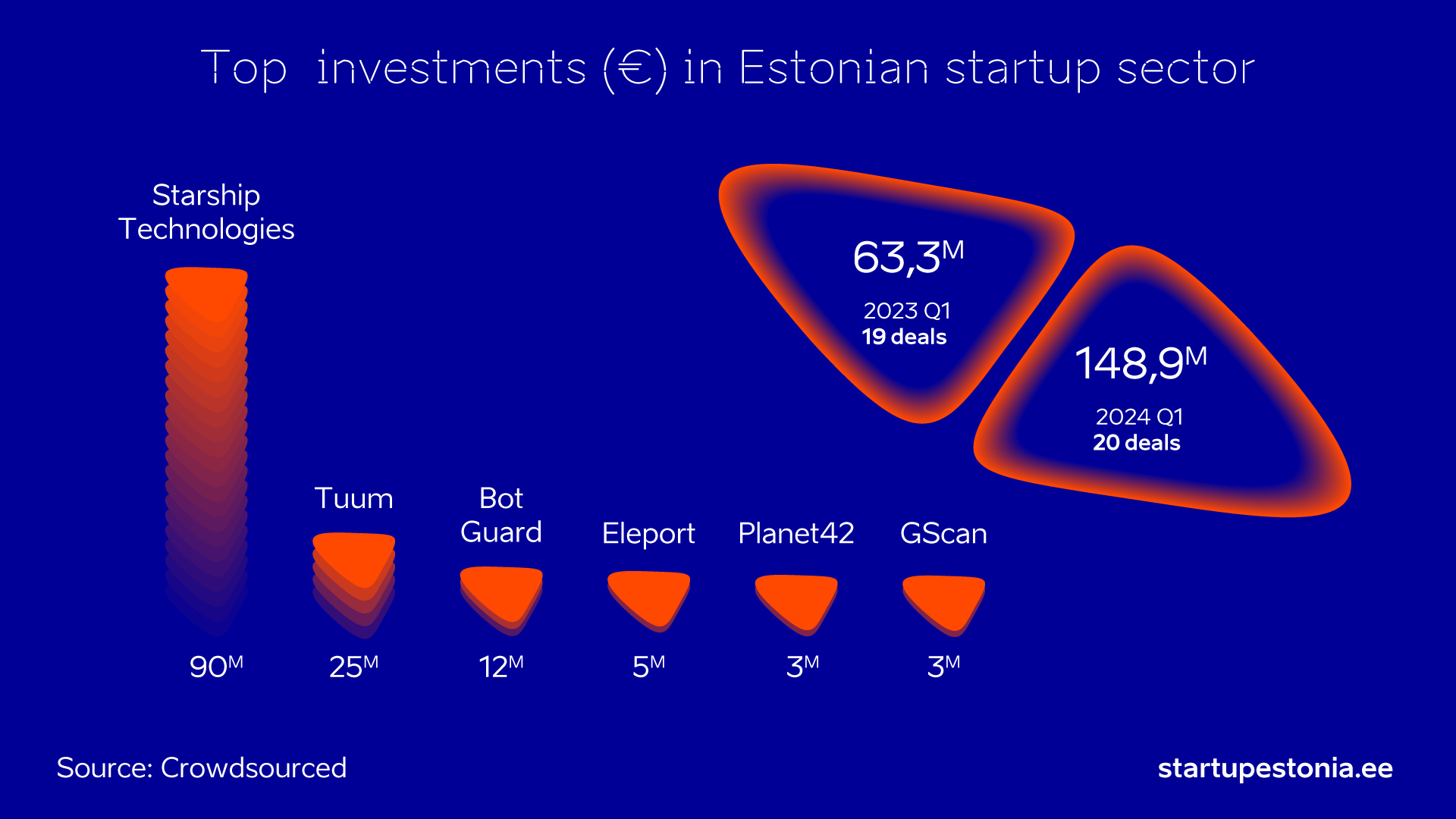
According to the crowdsourced table, a total of 148.9 million EUR was invested in sector companies during the first three months of 2024. There were 20 new investment deals, with 9 deals valued at more than 1 million EUR. The largest investments during the first three months of 2024 were made into Starship Technologies (90 million EUR), Tuum (25 million EUR), Bot Guard (12 million EUR), Eleport (5 million EUR), Planet 42 (3 million EUR), and GScan (3 million EUR). In comparison to the same period last year, the average deal size is significantly larger. During the first quarter of 2023, there were 19 deals with a total value of 63.3 million EUR.
During the first quarter of 2024, we witnessed 2 acquisitions in the ecosystem. Firstly, Klaus, an AI-powered quality management platform was acquired by Zendesk. Secondly, Arf a global settlement banking platform and Huma Finance merged.
Estonian Startup Visa
The Estonian Startup Visa continuously supports the sector’s demand for talent in the technology and IT field. In the first quarter of 2024, companies founded with Estonian Startup Visa paid 2.9 million EUR in employment taxes (+20% compared to Q1 2023), employed around 397 people in Estonia (+0,3% compared to Q1 2023), and brought their turnover to 30,1 million EUR (+10% compared to Q1 2023).
DeepTech companies in the startup sector
Estonian DeepTech sector continues steady growth by driving innovation and technological advancement both locally and globally.
DeepTech companies in the startup sector paid 13.1 million EUR in employment taxes, generated 87 million EUR turnover, and employed 2,139 people, about 16% of all sector employees in the end of the first quarter of 2024. Among DeepTech companies, the largest turnover was generated by Defsecintel with 19,9 M EUR, followed by Threod Systems with 12,9 M EUR and Comodule with 6,7 M EUR.
Notable observation, DeepTech funding trend shows no signs of slowing down. Investors willingness to put their money into complex ventures is well illustrated by Q1 results of 2024 where Estonian DeepTech companies signed 6 funding deals in total for 95.4 million EUR. The largest investments were raised by Starship Technologies (90 million EUR), GScan (3 million EUR), and Kingdom Technologies (1 million EUR).
Connecting startups, investors, universities and other ecosystem actors has been in the forefront with deeptech focused DeepEST conference and sTARTUp Day business festival organized in January in Tartu. Finally, Estonia was prominently featured at Hello Tomorrow Global Summit in Paris in March. Stay tuned for the Baltic DeepTech Report by Dealroom and Iron Wolf Capital, and Startup Estonia’s Estonian DeepTech Ecosystem Review. Both will be launched in May 2024.
Summary
In conclusion, while the economic landscape undergoes a period of gradual deceleration, echoed across different sectors, the Estonian startup ecosystem is still able to demonstrate a moderate growth. Amidst this backdrop of slowing momentum, there is a beacon of optimism—the resurgence of investment amounts. Despite the challenges posed by a shifting economic environment, the sector remains resilient and adaptable. As we navigate through these challenges, it’s crucial to recognize the enduring spirit of innovation driving the sector forward.
Sources: Startup Estonia, Estonian Tax and Customs Board, Dealroom, Funding of Estonian Tech Startups #estonianmafia