Estonia’s Startup Sector in 2024: Growth, Challenges, and Key Insights
In 2024, Estonia’s startup sector balanced between progress and pressure. Over the past year, we’ve seen this trend solidify as the country’s startup ecosystem navigates the highs and lows of innovation, growth, and global economic uncertainty. As we analyze the data, it becomes clear that Estonia’s startups are at a crossroads: they must adapt to the shifting economic landscape or risk losing momentum in a competitive global market.
Hedi Mardisoo, CEO and co-founder of Cachet and Board Member of the Estonian Founders Society:
The feelings about 2024 are mixed. As the CEO and co-founder of Cachet, I can say that while the past year was challenging, it was also successful. The revenue growth of startups in the last quarter of the year gives hope that many other Estonian startups may share a similar experience. Statistics indicate that a significant number of startups shut down last year, and the emergence of new startups was notably lower than in previous years. However, those that remain are stronger and more sustainable.
The key question is whether Estonia’s startups can maintain their momentum amid tightening economic realities. This report examines the numbers, trends, and stories shaping Estonia’s evolving role in the global startup landscape—no hype, just the essential facts assembled.
Important Disclaimer: Refining the Data – A Year of Learning and Accuracy
It has been a year since we fully integrated the Dealroom database, providing a more accurate and comprehensive overview of Estonia’s startup ecosystem. This transition has significantly enhanced data accuracy and sector analysis. While initial adjustments raised data consistency concerns, we have reached a stable point. However, keeping the database up-to-date and reliable remains an ongoing effort, and we will continually dedicate our time to refine our insights further.
In defining the startup sector, we encompass startups in their classical sense and mature startups that no longer fit the traditional age-based definition. Our data reflects early-stage startups alongside mature companies that have progressed beyond their initial phases, rapidly growing scale-ups, and even exit-stage companies still operating in Estonia. To ensure accuracy, we exclude service providers, coworking spaces, and businesses without an online presence.
This comprehensive approach allows us to examine the entire lifecycle of startups and sector companies, providing a more detailed understanding of their growth and development. It reflects the evolution of our now-mature ecosystem, shifting the focus from basic age-based classifications to evaluating companies based on their economic influence, technological export capabilities, and contributions to research and development. These factors drive the commercialization of groundbreaking innovations, global expansion, scalability, and the creation of high-value jobs. By broadening our statistical analysis, we aim to deliver a more objective and nuanced perspective on the dynamics of the startup sector.
Employment: A Shifting Workforce Landscape
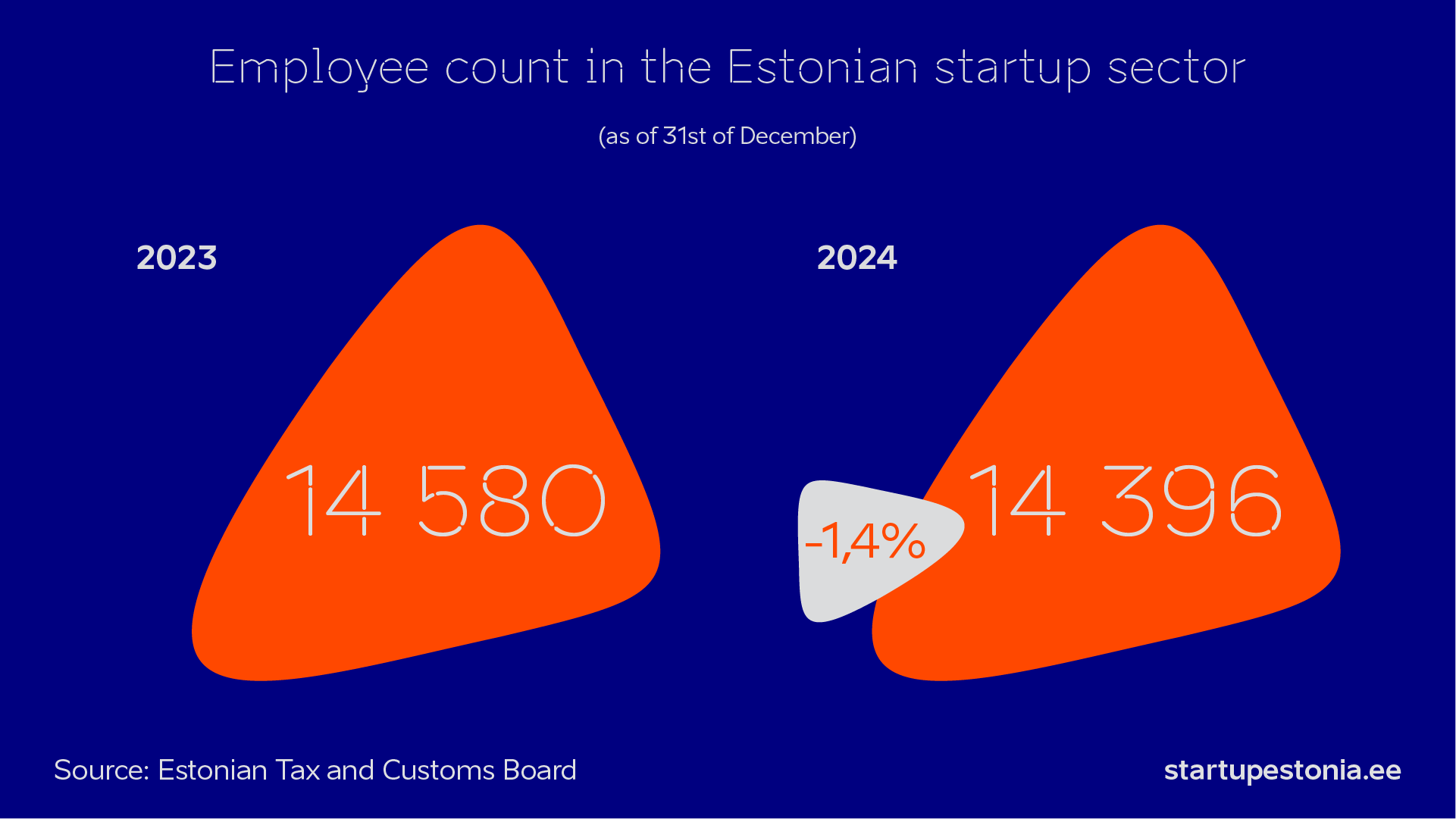
Employment trends in Estonia’s startup sector indicate both stability and change. According to the Estonian Tax and Customs Board, local startup companies employed 14,396 individuals by the end of 2024. Although employment figures have remained relatively steady since 2022, there has been a slight decline of 1.4% from 14,580 employees at the end of 2023.
More established companies and scale-ups are critical in job creation, employing 46% of the sector’s workforce. Employment has grown in early-stage startups (2.5%) and scale-ups (3.5%), while companies aged 6 to 10 have faced an 8.5% reduction in workforce. Reducing the workforce in startups aged 6 to 10 highlights mid-stage companies’ challenges sustaining workforce growth.
Considering the bigger picture, Statistics Estonia reports that 19,654 individuals were employed in Estonia’s startup sector at some point in 2024, which indicates that every 38th working person in Estonia was associated with the startup sector.
Who’s Employing?
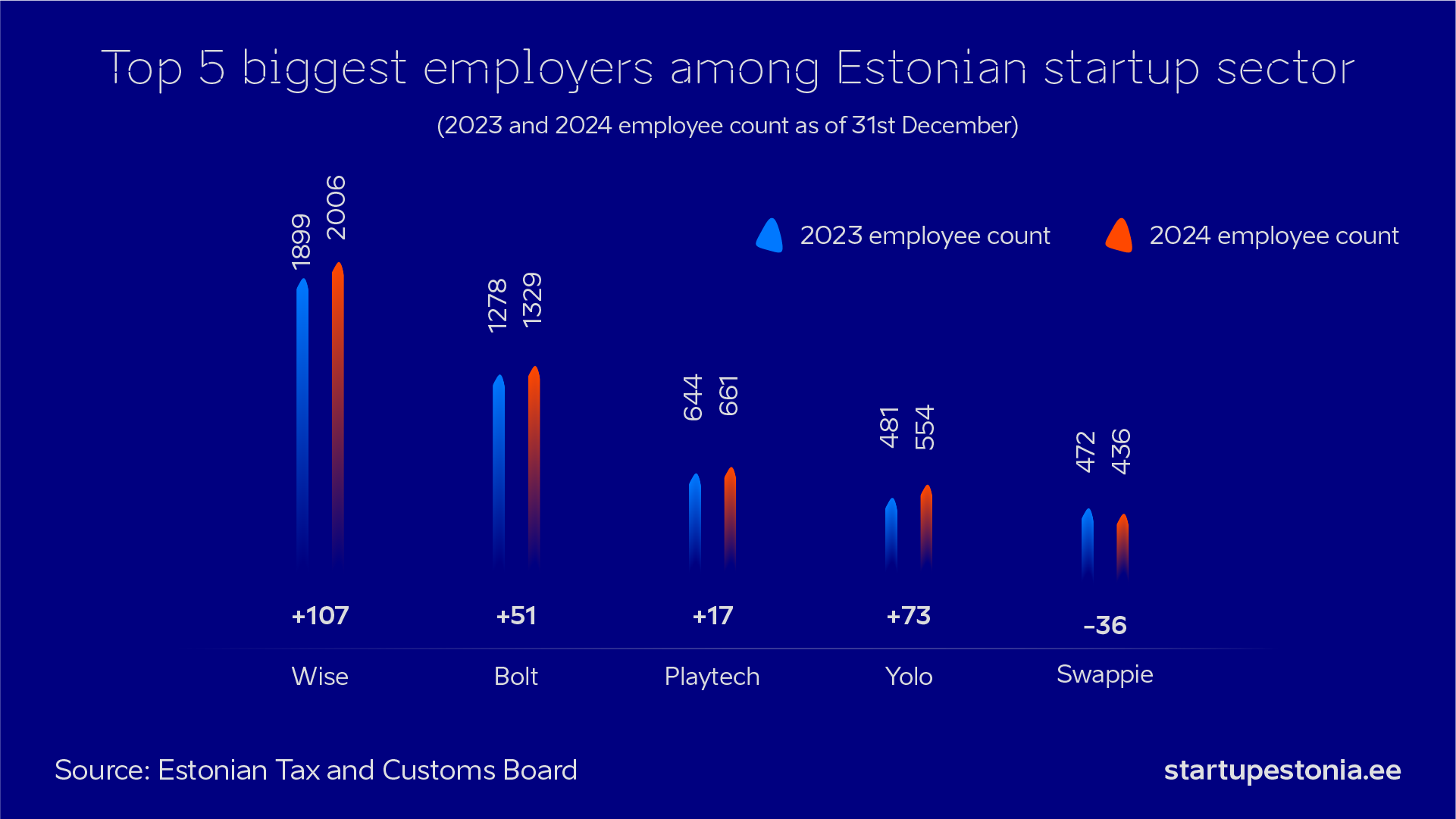
According to the Estonian Tax and Customs Board, the top 10 startup employers account for 45% of all jobs in the sector. The data does not indicate whether the positions are new or existing; instead, it shows the changes in employment positions compared to the previous period. The top recruiters are Wise, with 2,006 employees and 107 new hires compared to the same time last year, followed by Bolt, with 1,329 employees; Playtech, with 661 employees; Yolo, with 554 employees; and Swappie, with 436 employees.
Estonia’s Startup Workforce: Who’s Driving Growth?
Demographics in Estonia’s startup sector remain stable compared to previous years. Women comprise 37.6% of the workforce, while men comprise 62.4%.
Foreign talent plays a vital role in Estonia’s startup sector, with 31% of employees possessing foreign citizenship—5% from EU countries and 26% from non-EU nations. Global talent high tensity in the startup sector highlights the ecosystem’s dependence on international expertise and the necessity for policies that promote worldwide hiring and talent retention.
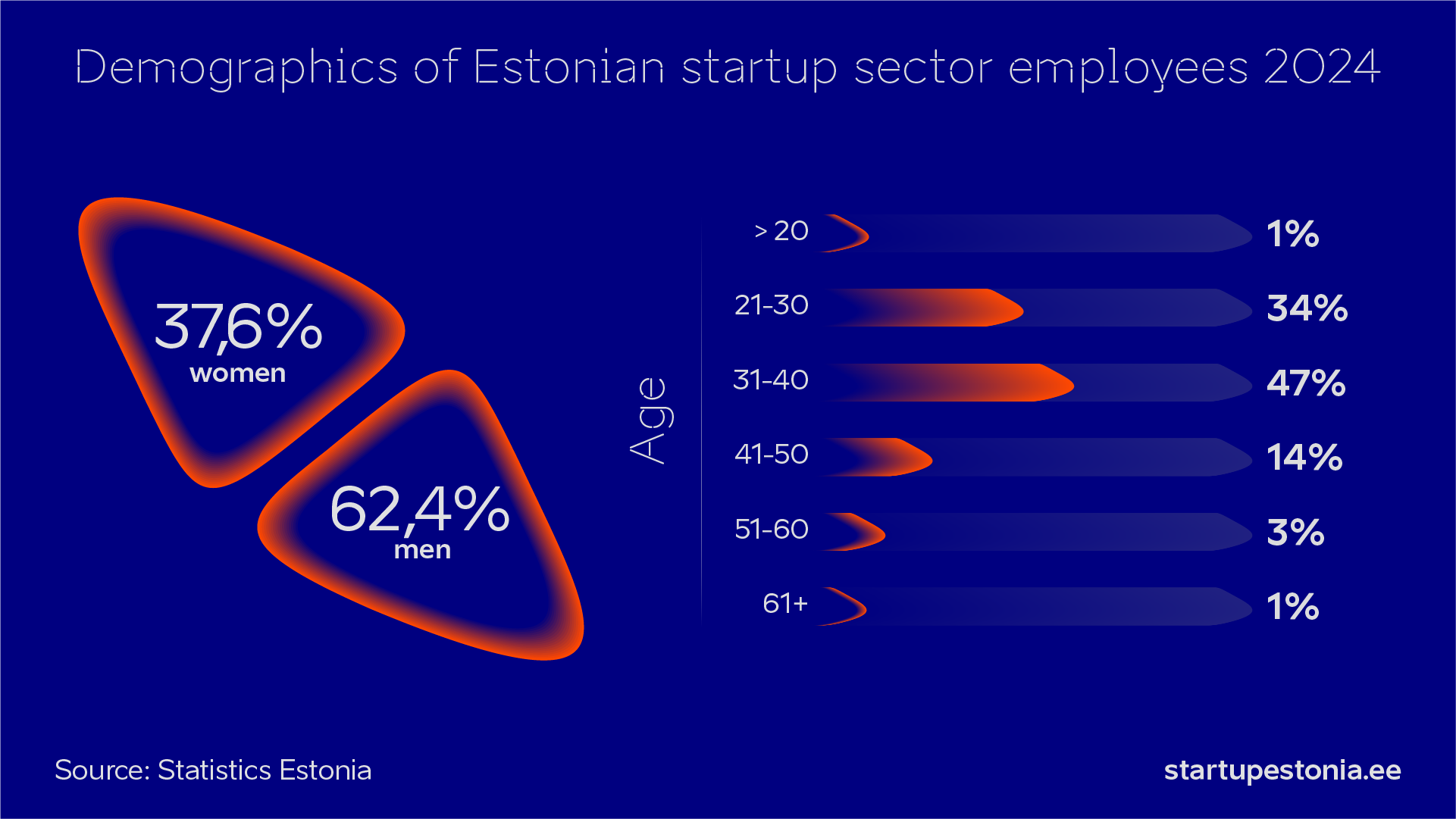
The prevalence of employees in the 31–40 age group indicates that startups attract professionals with significant experience, while the strong presence of younger employees (21–30) highlights startups’ appeal to early-career talent. Together, these trends illustrate a well-rounded workforce capable of driving the sector through experience, youthful energy, and cultural diversity.
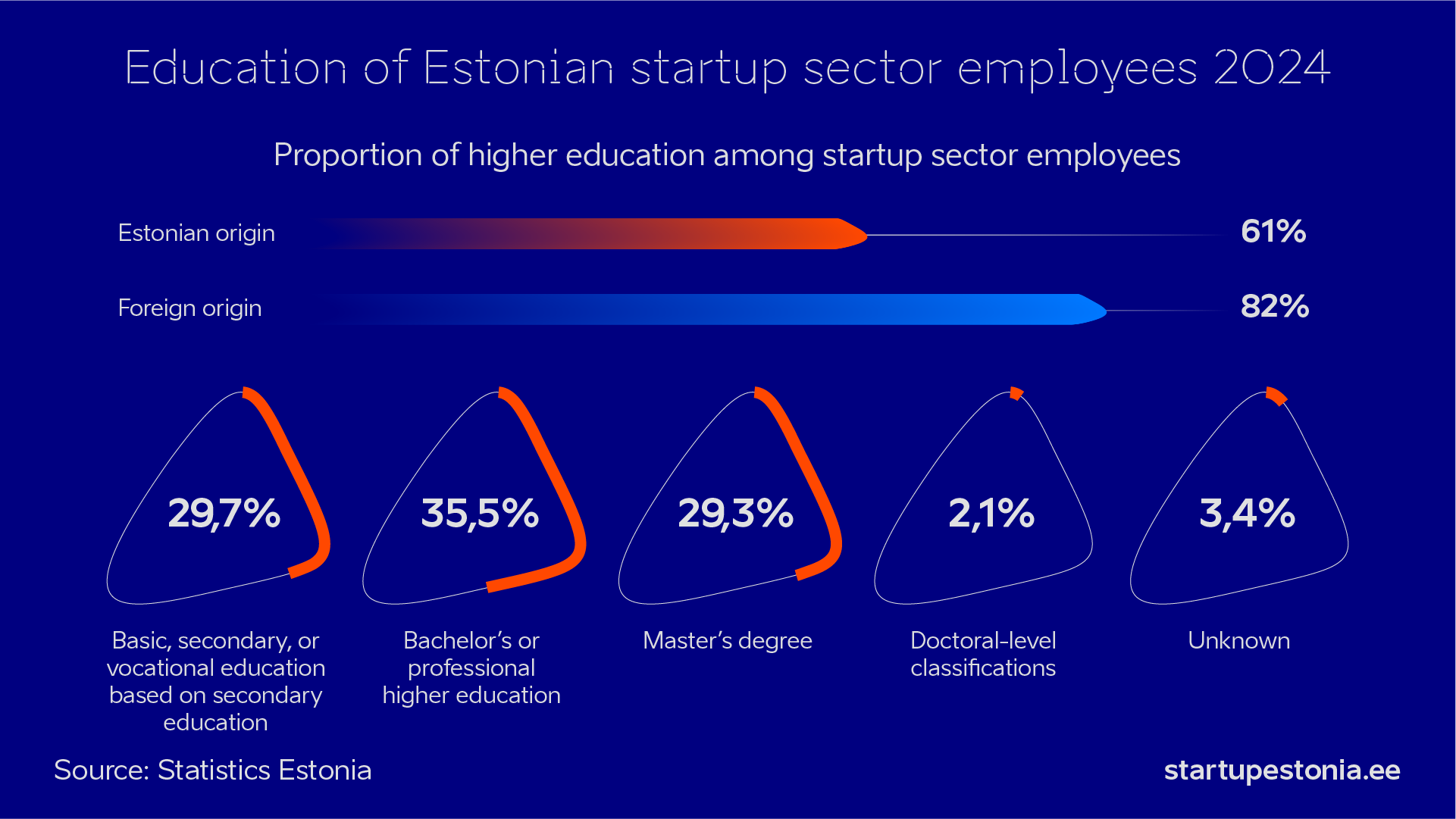
Education levels in the Estonian startup sector are high. 67% of employees possess a bachelor’s, master’s, or doctoral degree, which increases to 82% among foreign employees. The high amount of graduate and post-graduate employees in startups highlights the sector’s need for highly skilled professionals to foster innovation.
Regarding roles, 50% of the workforce comprises top specialists, reflecting the sector’s demand for advanced skills and expertise. 17% work in administrative or customer service positions, 13% are mid-level specialists or technicians, and 12% hold managerial roles. This distribution of roles highlights the sector’s focus on knowledge-intensive positions and the necessity for a diverse skill set to support the ecosystem’s operational and strategic growth.
Startup Founders: Who’s Leading the Way?
The average age of an Estonian startup founder is 39. Education continues to be a strong indicator of leadership in this sector, with 59% of founders holding a higher education degree. Notably, female founders are even more educated—77% possess a higher education qualification than 55% of their male counterparts. However, the gender balance among founders remains unchanged, with about 16% female representation.
According to Statistics Estonia, the citizenship data reveals that 54% of founders are Estonians, while 21% are foreign nationals. According to available data, 25% of founders’ citizenship status remains undetermined.
Taxes and Salaries: Steady Contributions to the Economy
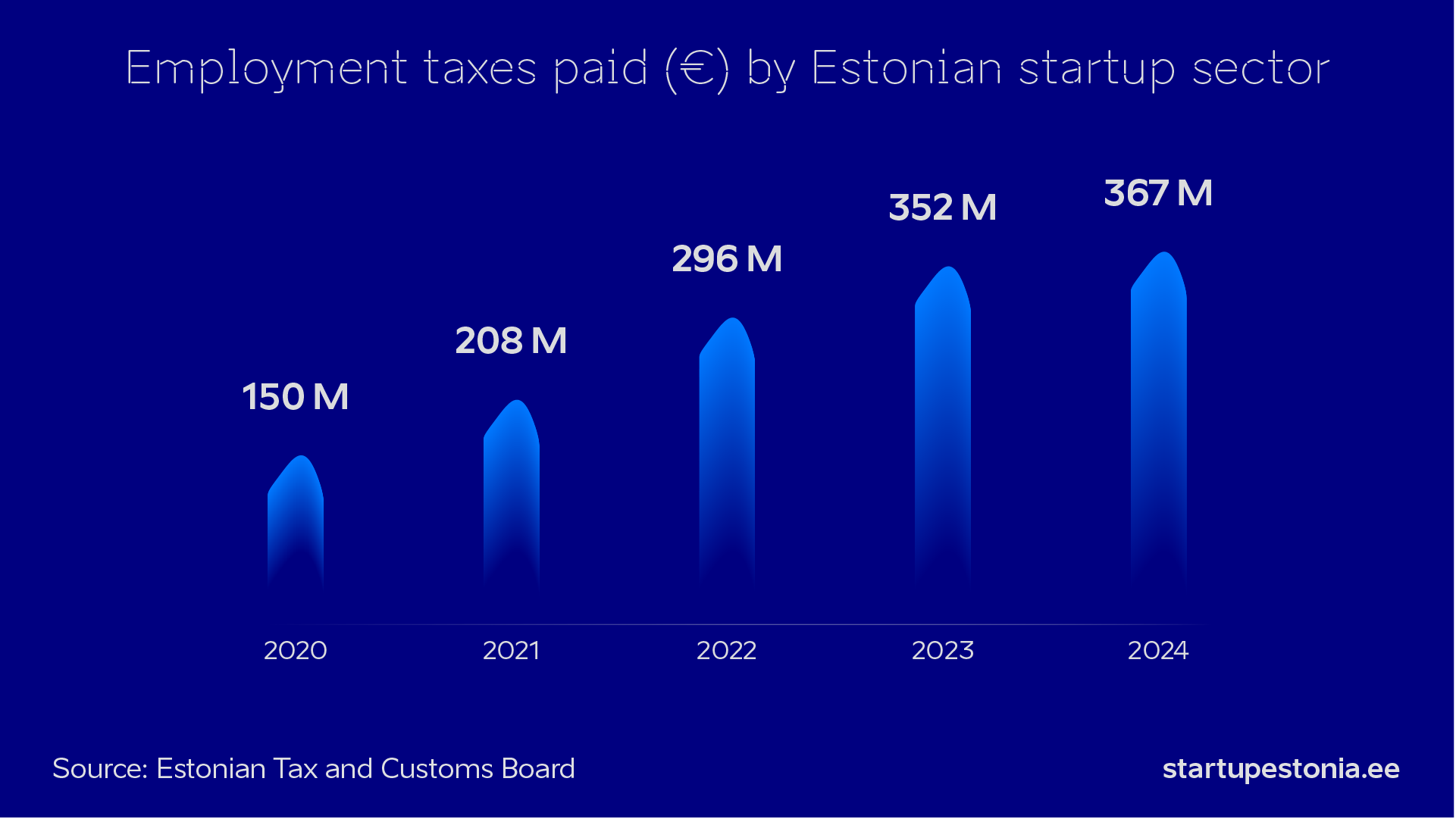
According to statistics from the Estonian Tax and Customs Board, employment tax contributions in the startup sector increased slightly in 2024, reaching 366.9 M EUR—a 4.3% rise from 351.8 M EUR in 2023. Major contributors included Bolt (41.8 M EUR), Wise (38 M EUR), Playtech (18.1 M EUR), Yolo (15.6 M EUR), and Pipedrive (14.5 M EUR).
According to Statistics Estonia, the average gross monthly salary in Estonia’s startup sector is 3,650 EUR, twice the national average.
The highest-paid employees are in the age group of 41 to 50, earning 4,491 EUR a month, followed by the 31 to 40 age group, earning 3,994 EUR a month. Foreign employees receive an average monthly salary of 3,897 EUR, highlighting the sector’s competitive compensation structure aimed at attracting international talent to the Estonian startup ecosystem. The Estonian startup sector is committed to rewarding expertise, vital to fostering economic growth and innovation in Estonia.
Turnover and Investments: Adapting to a Shifting Market
Disclaimer: Please note that turnover data is published based on public quarterly figures from the Estonian Tax and Customs Board and is not comparable to companies’ annual financial report data.
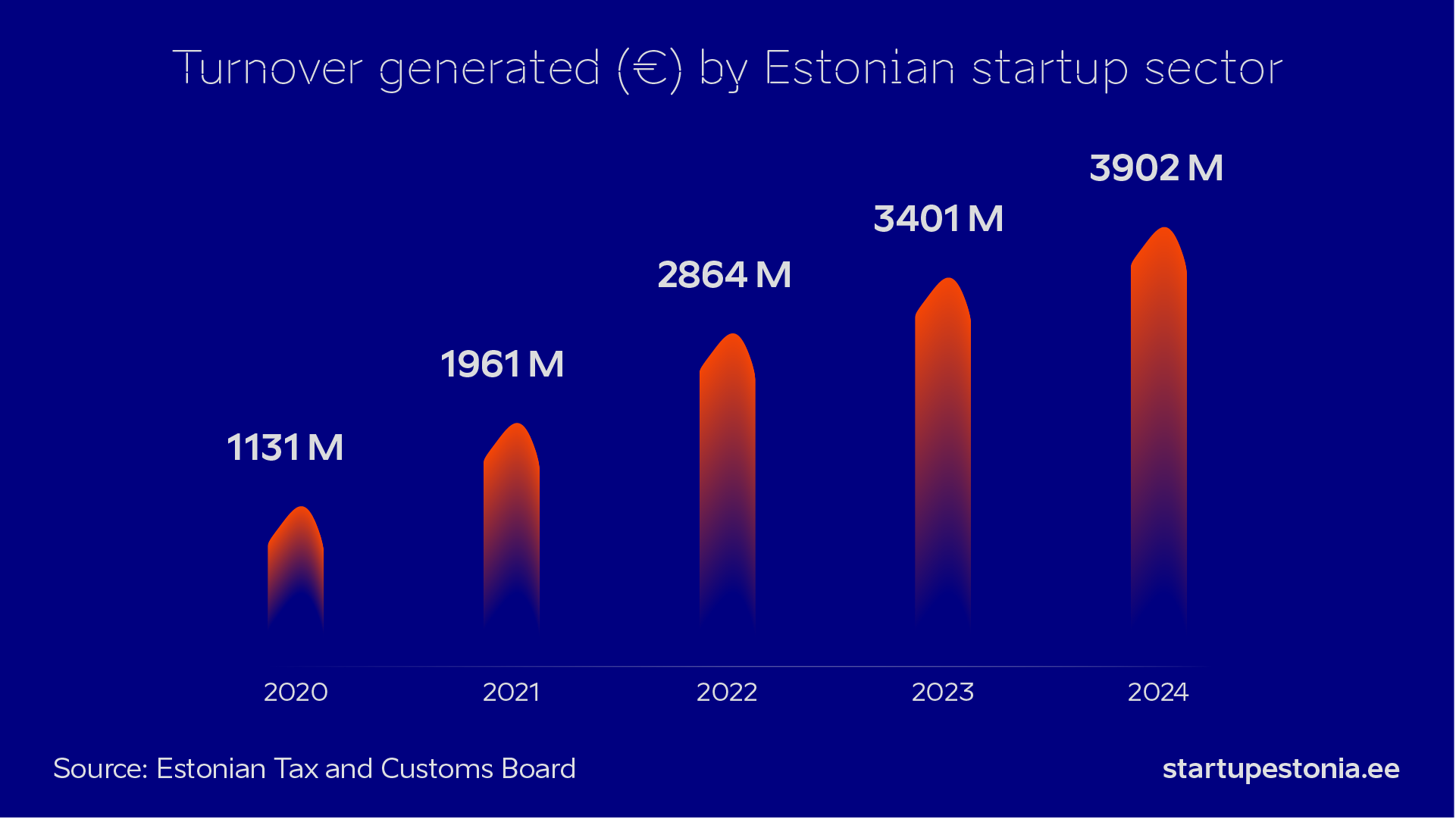
According to quarterly data from the Estonian Tax and Customs Board, Estonian startups achieved a record turnover of 3.902 billion EUR in 2024, representing a 14.7% increase from 2023 (3.401 billion EUR). However, the sector’s growth rate has slowed compared to previous years.
The Estonian startup sector did not gain record turnover due to a stable, growing economy; instead, it outperformed the broader economy amid economic pressures, generating nearly 15% growth while the total turnover of all Estonian taxpayers declined by 1%.
An analysis of company age within the sector reveals that startups aged 6–10 contribute the largest share of turnover, accounting for approximately 63% of the total. Meanwhile, younger startups (up to 5 years old) experienced a significant 20% turnover growth year-over-year, and scale-up companies—those in the rapid growth phase—saw an even more substantial increase of about 25%. These trends highlight a maturing ecosystem, where further established companies remain dominant in value creation while younger startups and scale-ups exhibit vigorous growth year-over-year.
Bolt generated the most considerable turnover among all sector companies, at 1,414.3 M EUR, followed by Pipedrive with 282.1 M EUR, Veriff with 102 M EUR, Yolo with 79.6 M EUR, and BetPawa with 68.1 M EUR.
Additionally, the total turnover of the top 10 companies in 2024 represented 56% of the sector’s total turnover.
Investment trends: a Recalibration in Funding Strategies
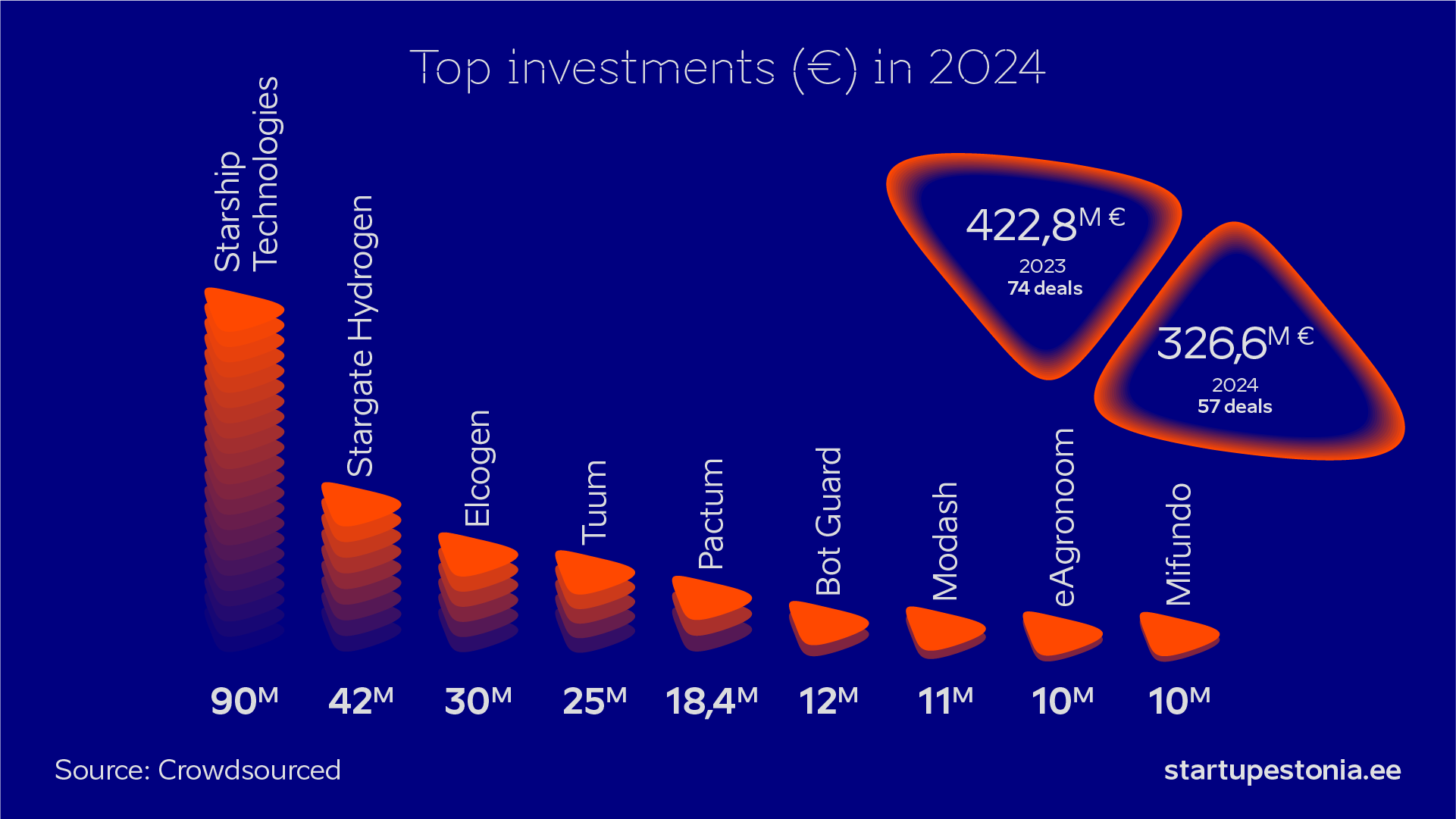
According to the crowdsourced table, investors allocated 326.6M EUR to Estonian startups in 2024, a 23% decline from 2023 and the lowest annual investment volume in five years. This more selective funds-allocation trend aligns with broader European movements amid macroeconomic uncertainties, where venture capital activity has adjusted following the peak years of 2021–2022.
Despite the downturn, the sector demonstrated adaptability by closing 57 deals, 29 of which exceeded 1 million EUR in size. While the total number of deals and those exceeding 1 million EUR decreased compared to the previous year, this trend does not necessarily apply to every startup life stage.
Kaari Kink, Investment Manager at Superangel, Board Member of the Estonian Private Equity & Venture Capital Association:
The funding environment in 2024 remained challenging, with investors expecting stronger performance for the risk they are taking. Early-stage funding rounds declined despite ample capital in the market, pointing to either increased investor selectivity or a drop in overall deal flow. Meanwhile, the number of growth-stage rounds increased compared to 2023, reaching similar levels to 2021, suggesting that round sizes have shrunk. Equally, the ecosystem is still adjusting to the impact of the aggressive growth rounds raised in 2022. Some companies have successfully adapted and delayed fundraising, turned to alternative financing options, such as venture debt, to extend the runway and improve profitability, or wound down the operations altogether.
Even as investors’ strategies adapt, the State of European Tech Report 2024 highlighted the continuous strength of the Estonian startup ecosystem.
Estonia remains a leader in VC investment relative to GDP, underscoring continued investor confidence in the local ecosystem.
With VC funding representing 1.17% of its economy over the past decade, Estonia is a prime example of startup success. According to the report, investors like Taavet Hinrikus, co-founder of Wise and this year’s recipient of the Investor of the Year 2024 award by the Estonian Startup Awards, support the further growth of the Estonian startup ecosystem. He has made over 90 investments, with approximately half focused on Estonia and the UK—two key hubs for the fintech giant.
Furthermore, the same report indicates that Bolt, a ride-hailing company and one of Estonia’s global tech champions, aims for an IPO in 2025, which signals ongoing confidence in the country’s innovative potential and high-growth trajectory.
The Most Prominent Investments Received in 2024
Notable investments in Estonian startups in 2024 reflected the broader industry trends shaping the European startup ecosystem. The largest funding rounds in Estonia included Starship Technologies (90M EUR), Stargate Hydrogen (42M EUR), Elcogen (30M EUR), Tuum (25M EUR), Pactum (18.4M EUR), Bot Guard (12M EUR), Modash (11M EUR), eAgronoom (10M EUR), and Mifundo (10M EUR).
These investments align with Dealroom’s heatmap for Estonia, highlighting Energy, FinTech, Security, Marketing, and FoodTech as key sectors that secured funding last year. Such a trend reflects Europe’s increasing emphasis on sustainability, digital transformation, and economic resilience and mirrors a global investor shift toward impactful, future-focused technologies.
Mergers and Acquisitions
In the second half of 2024, notable mergers and exits occurred in the Estonian startup ecosystem. In July, Germany’s digital tax filing platform Taxfix acquired TaxScouts. In August, Swedish banking group Swedbank AB purchased Tallinn-based fintech Paywerk. In September, Wisnio and Assessio Group merged, while in October, UK fintech Pockit acquired Monese, an Estonian-founded pan-European fintech firm.
December closed the year with two significant developments: Admicom acquired Bauhub, and Salto X announced the shutdown of its platform, merging with Australia-based Cake Equity, marking the end of its equity management service for growth companies.
Before these deals, the year started with several key acquisitions and mergers in the Estonian startup sector. In January, Zendesk acquired the AI-powered quality management platform Klaus. In April, the global settlement banking platform Arf merged with Huma Finance. French cybersecurity group Neverhack took full ownership of Security Software OÜ, which operates under the Cybers brand in Estonia.
In June, Up Group, a leading provider of employee benefits services in France, acquired a controlling stake in Stebby.
DeepTech: A Rising Force
DeepTech continues to gain momentum, accounting for 63% of total startup investments in the Estonian startup sector in 2024. Companies in this sector generated 325M EUR in turnover (+19.3% year-over-year), paid 58M EUR in employment taxes (16% of the entire sector), and employed 2,439 people, representing 17% of all sector employees.
Defsecintel Solutions led the DeepTech sector in turnover with 46M EUR, followed by Cleveron (33.6M EUR) and Threod Systems (32.6M EUR). Milrem is the sector’s largest employer (296 employees) and payer of employment taxes (6.1 M EUR).
Inga Kõue, DeepTech Project Lead in Startup Estonia:
The defense sector is rapidly emerging as a key player within the DeepTech industry. It accounts for 14% of all the DeepTech companies. Notably, three of the top five companies in the sector are defense-related, highlighting its growing influence. This expansion has been significantly driven by geopolitical events and the region’s increasing focus on military strength, fueling the creation of new companies in the field.
Furthermore, the Estonian government recently launched a 100 M EUR DefenceTech fund, which will further increase the development of new defense-oriented DeepTechs in the region.
Inga Kõue:
While companies in the defense sector have experienced the most growth in turnover and tax contributions, investors are placing their trust and capital in DeepTechs from clean energy, urban sustainability, and innovative food solutions, believing in their growth potential.
In 2024, DeepTech companies raised 206,2 million EUR (63% of sector investments) across 20 deals. Of these, 12 deals were 1 M EUR or higher, led by Starship Technologies (90M EUR), Stargate Hydrogen (42 M EUR), and Elcogen (30 M EUR). Other notable DeepTech investment deals included Pactum (18,4 M), Äio (6,1 M), and Miros (6 M EUR).
Estonian DeepTech’s success aligns with broader trends in Europe. The State of European Tech Report 2024 has highlighted DeepTech’s strong performance. Investment has increased by 17% from 2015, accounting for a third (33%) of all European tech funding. Funding for DeepTech companies has risen tenfold over the past decade, reflecting growing investor confidence in their transformative potential.
Six of the top 20 fundraisers in the Estonian startup sector in 2024 were DeepTech companies, and four were in the top five.

Looking Ahead: The Future of Estonia’s Startup Ecosystem
According to the European Innovation Scoreboard 2024, Estonia has shown remarkable progress in innovation, achieving a 27-point increase in its performance index between 2017 and 2024. This improvement has elevated Estonia to the category of Strong Innovators. Key contributors to this growth include significant advancements in digital skills, reductions in industrial air emissions, and a strong focus on exporting medium and high-tech products.
The Estonian government has actively supported innovation through initiatives such as reforms in doctoral education funding and mobility programs for postgraduate students.
Additionally, establishing a new research and technology organization in 2023 underscores the country’s commitment to fostering applied research and supporting innovative businesses. These efforts and a dynamic startup ecosystem highlight Estonia’s capacity for sustained innovation and technological advancement.
Nevertheless, as Estonia’s startup ecosystem remains resilient, signs of slowing investment and workforce challenges signal a need for adaptation. 2024 has been a year of recalibration, and strategic adjustments now will determine Estonia’s position in the global market.
Vaido Mikheim, the Head of Startup Estonia (interviewed by sTARTUpDay 2025):
Estonia has historically performed exceptionally well—our per capita unicorn count is impressive, and we’ve had relatively few major failures. However, the past few years have introduced some challenges. Fewer startups have been founded, investment volumes have declined, and we’re seeing a natural correction in the ecosystem. The question now is whether Estonia will continue its success story or face a slowdown.
The sector’s ability to attract talent, secure funding, and scale innovations will be crucial in maintaining its competitive edge. As we move into 2025, Estonia’s startups are not just weathering economic shifts but actively shaping the future with a mindset of adaptability, collaboration, and long-term vision. The trends point to a maturing ecosystem charting its course, empowered by the lessons and adjustments of the past year.
Hedi Mardisoo, CEO and co-founder of Cachet and Board Member of the Estonian Founders Society:
We hope to move toward positive growth in 2025 as the economic environment shows signs of overall improvement. Additionally, we wish many founders who had to shut down their businesses would return after a brief hiatus with fresh and improved ideas. Estonia and the European Union are also taking steps to facilitate company growth and expansion in the European market.
What can we do to help the ecosystem renew itself and encourage another step forward? We will assist you by attracting international talent, strengthening regional entrepreneurship, and enhancing the business environment. Moreover, international outreach is crucial, as much of the investment capital originates from outside Estonia. Startup Estonia engages in global events and trade missions, such as Tech Arena in Sweden, Hello Tomorrow in Paris, and the Rio Web Summit in Brazil, to bolster Estonia’s presence in key markets, and we welcome the most promising champions to come along.
What can we propose based on the existing values, such as Estona’s strong innovator score, our close-knit and connected ecosystem, and most importantly, the confidence in our capabilities as the silver lining?
Vaido Mikheim:
Build new companies, work hard, and stay optimistic. Success follows perseverance!
Sources: Startup Estonia, Statistics Estonia, Estonian Tax and Customs Board, Dealroom, Funding of Estonian Tech Startups #estonianmafia
Startup Estonia is a program under Enterprise Estonia that develops the Estonian startup ecosystem. The program (project number 2021-2027.1.03.23-0212) is financed by the European Union.