2023 Unveiled: Triumphs, Trials, and True Grit of the Estonian Startup Scene
A year of contrast and resilience
The year 2023 was a paradox for Estonia’s startup ecosystem, marked by significant triumphs amidst global economic challenges. Valued for its high number of funded startups per capita in Europe, Estonia continues to shine, reflecting a mature, tight-knit community recognized by State of European Tech 2023 report by Atomico for its innovative strength and scrappy approach. 
This year, however, was not without its trials. Amidst a cooling global economy, Estonian startups faced downrounding, downsizing, and the hard truth that building startups is an demanding journey.
Despite the general economic downturn, the Estonian startup sector remained stable. Investment activity has significantly decreased both here and globally, but our startups responded to the changed environment by focusing on maintaining turnovers and profitability. The public has witnesses this as layoffs or the postponement of ambitious growth plans, but it is precisely this strategy that helps our startups survive”, said Head of Startup Estonia, Eve Peeterson.
Let’s start innovating
 The Estonian startup ecosystem continues to evolve, marked by a significant transition last November as we migrated our database to Dealroom. This move isn’t just a change of platform; it’s an expansion of vision. Previously focused on startups, we now embrace a wider spectrum, including startup sector growth companies: mature startups, scale-ups, and successful exits still operating within Estonia.
Growth companies are:
- Matured startups – companies that have evolved from the startup phase and are older than ten years.
- Exits that remain operational within Estonia.
- Scale-up champions as per the following criteria:
- workforce of a minimum of 50 employees in Estonia;
- paid at least €1 million in labor taxes in the past year;
- the past three years showed a minimum 20% growth in cumulative labor tax.
This broader lens allows us to capture the entire lifecycle of startups and sector companies, providing deeper insights into their growth and evolution, as well as in our yearly statistics. Eve Peeterson, the Head of Startup Estonia, emphasizes the shift beyond mere age classification toward evaluating companies’ economic impact, technological export potential, and contributions to research and development:
Estonian startups are becoming increasingly mature, surpassing the conventional ten-year threshold, and practice shows that the development cycles of technology-intensive companies are longer than this. Therefore, classifying companies based on age is no longer relevant. Much more important are the impact on the country’s economy and the export potential of new technologies, the company’s contribution to R&D and commercialization of breakthrough innovation, global ambition and scalability, and the creation of high-value-added jobs. We have expanded our statistics to get a more objective picture of what is happening in the startup sector.
This new approach offers a comprehensive view of our startup landscape and fosters a more inclusive and dynamic community. It enhances our ability to support startups at every stage of their journey. With Dealroom’s global intelligence, we’re boosting visibility, facilitating better partnerships, and fostering innovation.
The refreshed Estonian Startup Ecosystem Platform and our new website mark the beginning of a new era. We’re committed to refining these tools, ensuring they become central hubs for Estonia’s vibrant startup community, and driving forward our nation’s legacy of innovation.
Like any fresh start, our journey with the new platform may bring some bumps along the way. But fear not! We’re on it, ready to smooth out any hiccups and evolve step by step. Our aim? Craft this into a community hotspot, a home for our powerful Estonian startup ecosystem. So, let’s embrace the quirks and build something extraordinary together!
Employment: adapting to new norms
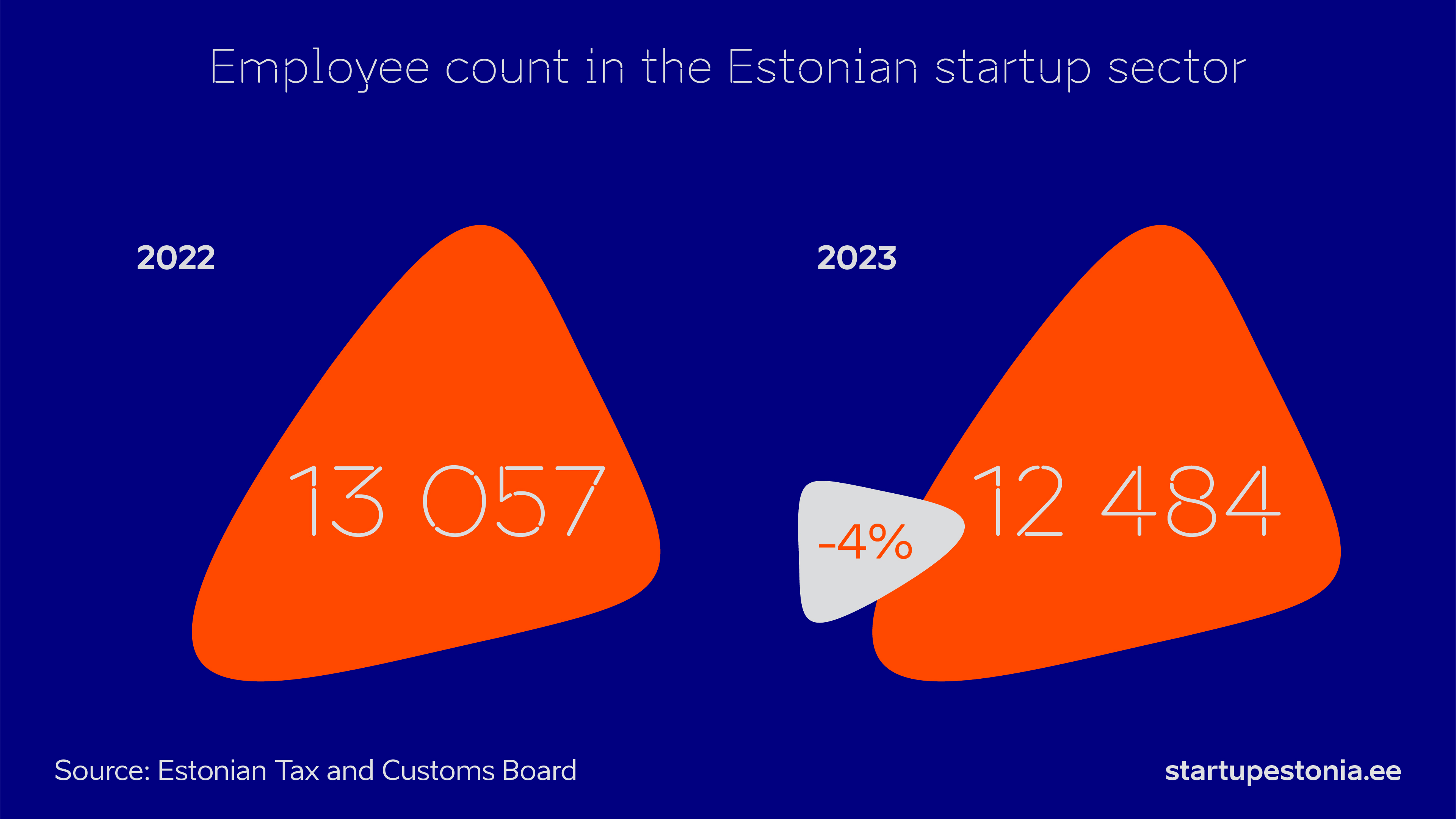
People are the heart of Estonia’s startup sector, which, according to Estonian Tax and Customs Board statistics, has faced a 4% workforce reduction due to economic downturns, now numbering 12 484 employees from last year’s 13 057. Approximately 69% of the employees work in startups, while growth companies employ 31%. Despite economic headwinds, Estonia’s startup sector remains dynamic.
 The broader picture reveals vibrant participation: according to Statistics Estonia, 17 403 people were involved in the sector in 2023 for at least one day, equating to every 41st working Estonian. Specifically, 12 477 individuals were employed by startups, representing every 57th worker in the Estonian working population.
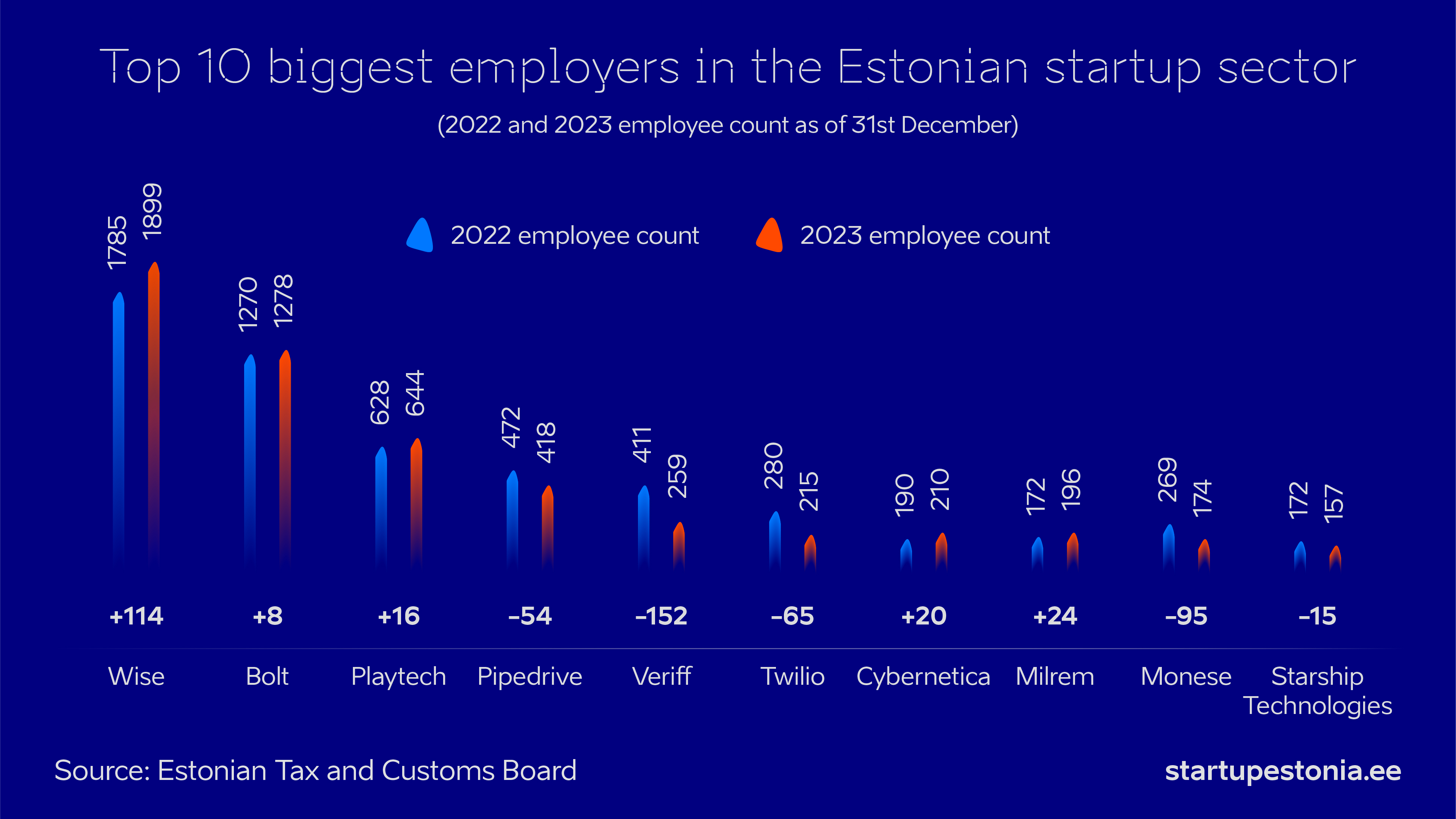
According to the Estonian Tax and Customs Board, the top ten companies, including Wise (1899 employees), Bolt (1278 employees), and Playtech (644 employees), are responsible for a remarkable 46% of the jobs created in the startup sector, showcasing their pivotal role in the ecosystem.
Demographics of the sector
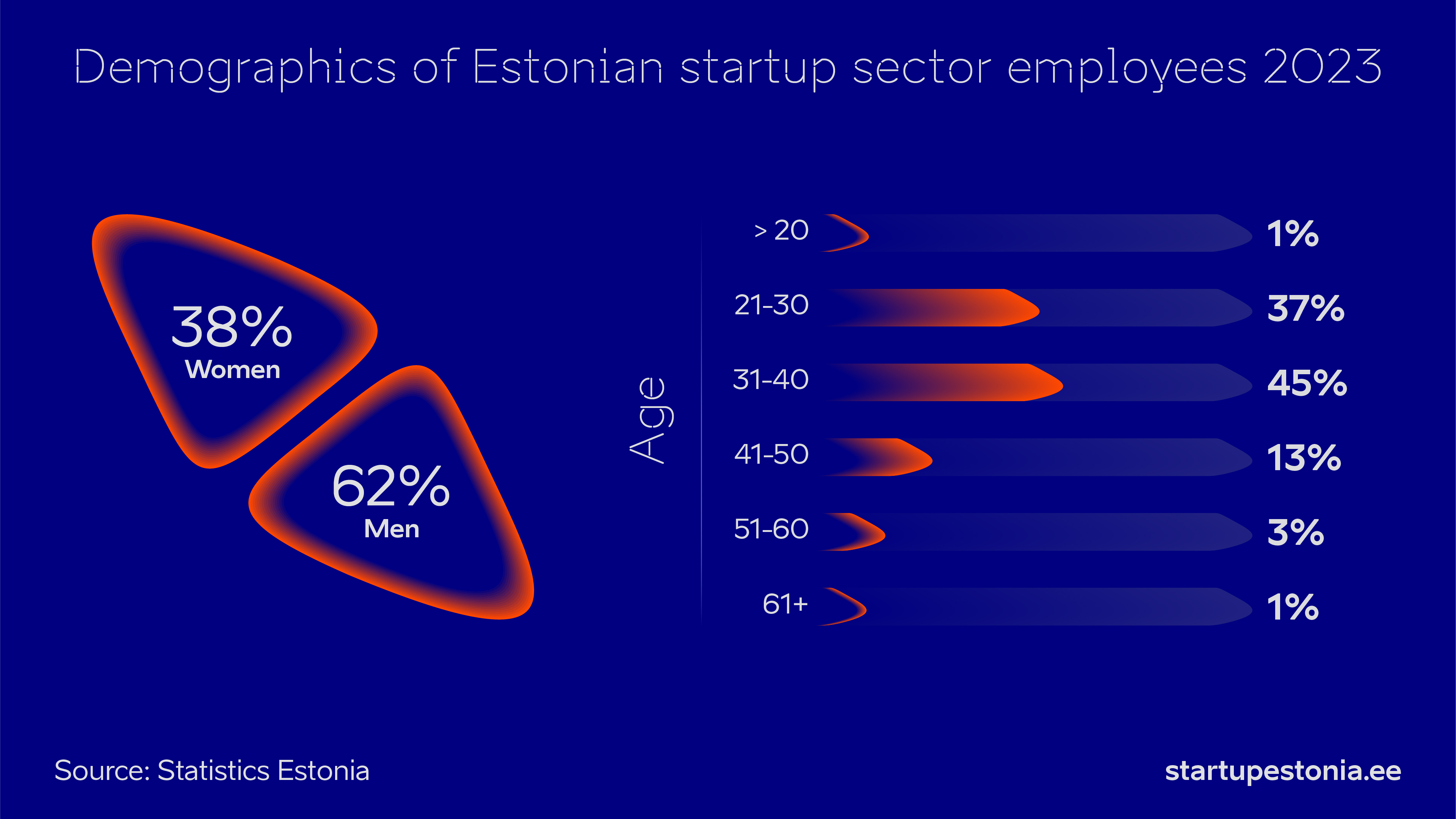
The demographics of Estonia’s startups showcase diversity and consistency with previous years. Notably, the gender distribution remains stable, with 38% of women and 62% of men working in the sector’s companies. Age-wise, a majority are between 31-40 years old (45%) and 21-30 years old (37%).
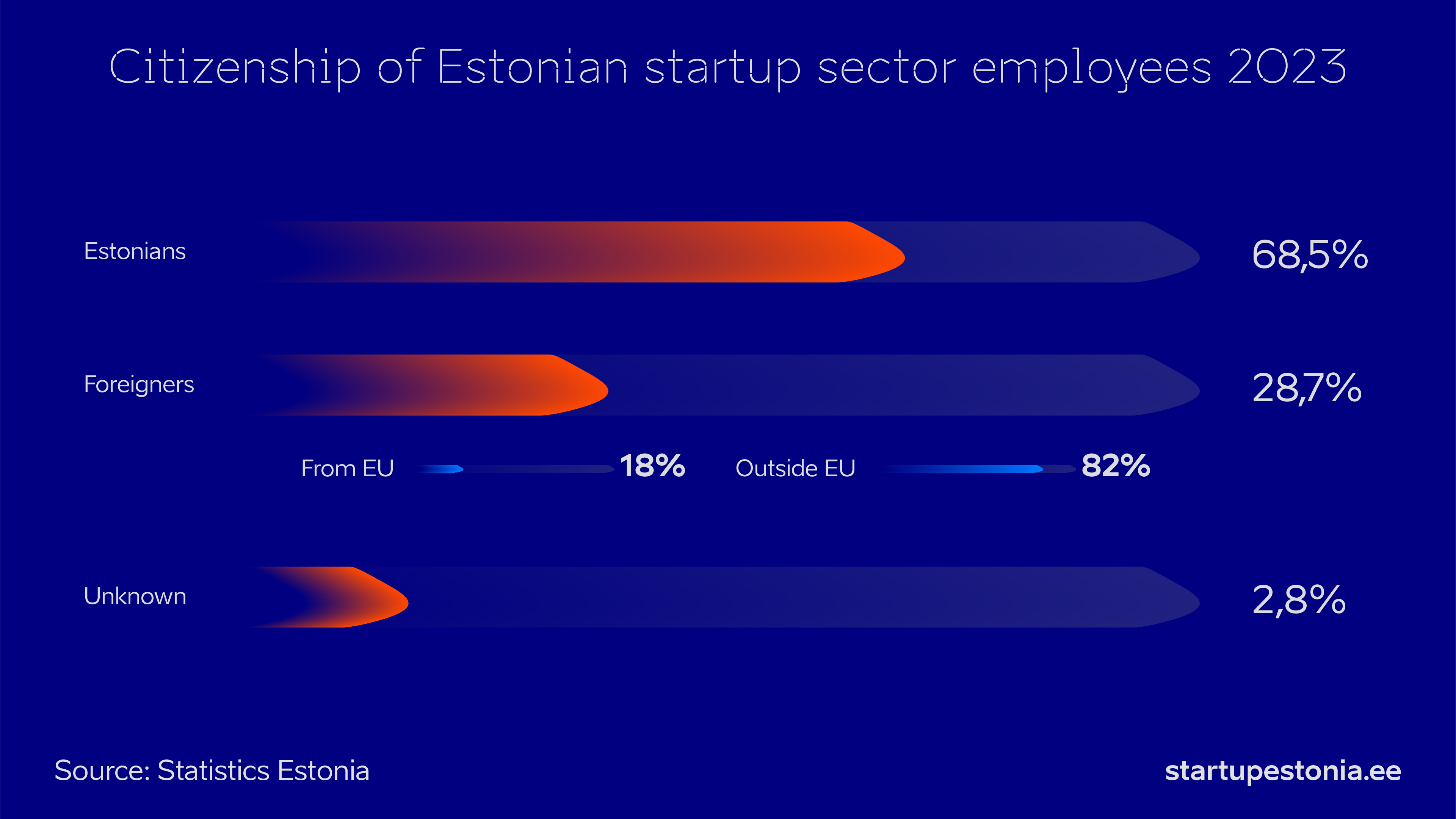
The research underscores the importance of diverse teams in fostering innovation, showing that varied backgrounds and experiences lead to higher revenue growth and increased innovation. The ecosystem benefits from diverse perspectives and experiences. Estonia’s startup sector’s international flair is showing its global appeal. Nearly a third of the sector’s workforce comes from outside Estonia, including relatively high non-EU talent representation.
However, Estonia continuously faces a talent shortage, particularly among top specialists with specific skills. For local startups and growth companies, recruiting foreign talent is often essential for growth, but our immigration caps of 0.1% of Estonia’s population per year (this is 1303 people, compared to the sector’s 12 520 employees) are severely restricting our tech companies’ potential. As Estonia aims to enhance its startup ecosystem, embracing diversity and recognizing the sector’s needs for recruitment becomes crucial.
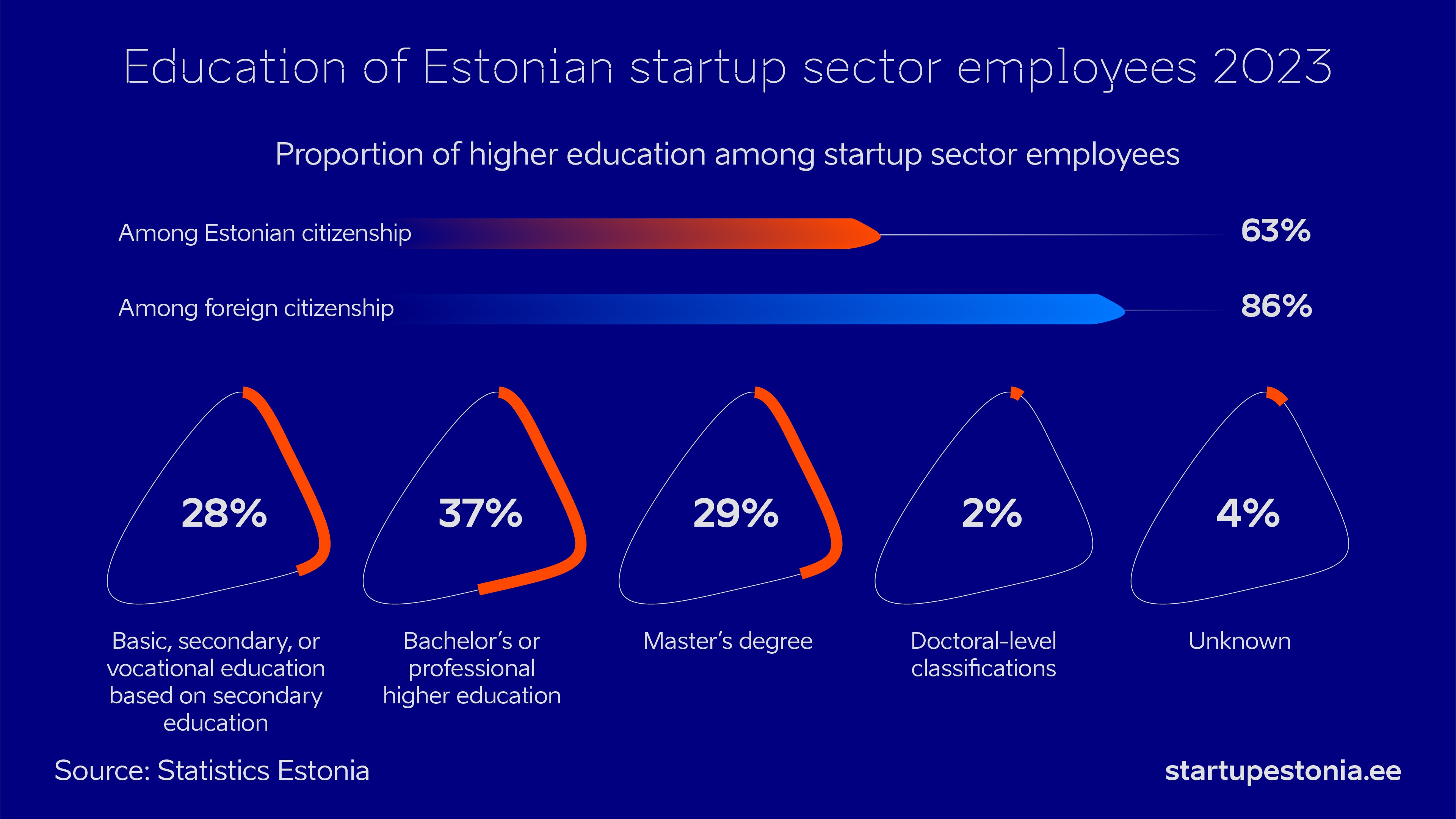
68% of employees in the Estonian startup sector hold higher education degrees. This includes 37% with bachelor’s or equivalent degrees, 29% with master’s degrees, and 2% with doctoral qualifications. Notably, the level of higher education among foreign talent is remarkably higher, at 86% compared to their Estonian peers, underlining the ecosystem’s intellectual richness and its attraction for highly skilled international talent. This educational diversity fuels innovation and contributes to the sector’s dynamism.
Employment taxes & salary
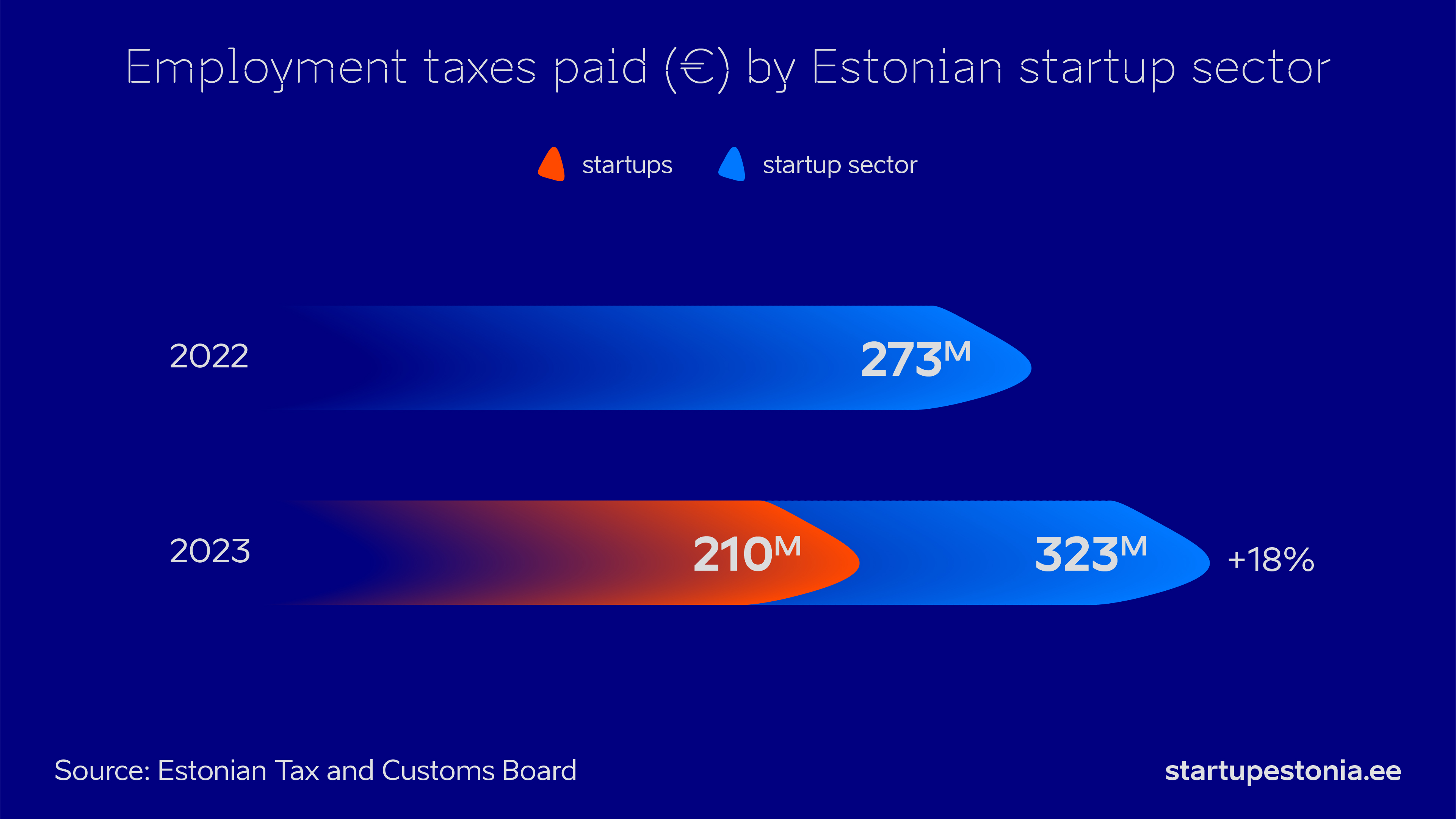
Employment taxes paid by the startup sector are an important indicator of the sector’s vitality and economic contribution. According to the statistics by the Estonian Tax and Customs Board, companies in the Estonian startup sector paid 323 million EUR in employment taxes, up 18% from the previous year’s 273 million EUR. 65% of the taxes were contributed by startups, and 35% were paid by growth companies.
The top 10 contributors create 50% of all sector employment taxes for the state, with well-known ecosystem leaders like Bolt (36,9 M EUR), Wise (34,9 M EUR), Playtech (17,8 M EUR), and Pipedrive (16,4 M EUR) yielding to the state.
According to Statistics Estonia, salaries also reflected the whole startup sector’s strength, with the average monthly gross salary at 4253 EUR, notably 2,2 times higher than the national average, showcasing the sector’s rewarding nature for talent. The calculations are based on the total number of employees who have worked in startups for at least one day during 2023). The average monthly gross salary in startups was 4185 EUR.
The data reveals varied compensation levels: foreign employees in Estonian startups earn a higher average monthly gross salary (4827 EUR) than their Estonian peers. Additionally, age influences earnings, with those between 41-50 years receiving the highest average at 5134 EUR, followed by the 31-40 age group at 4757 EUR, reflecting the value placed on experience and international expertise within the sector.
Financial dynamics: turnover, investments, and exits in the Estonian startup landscape
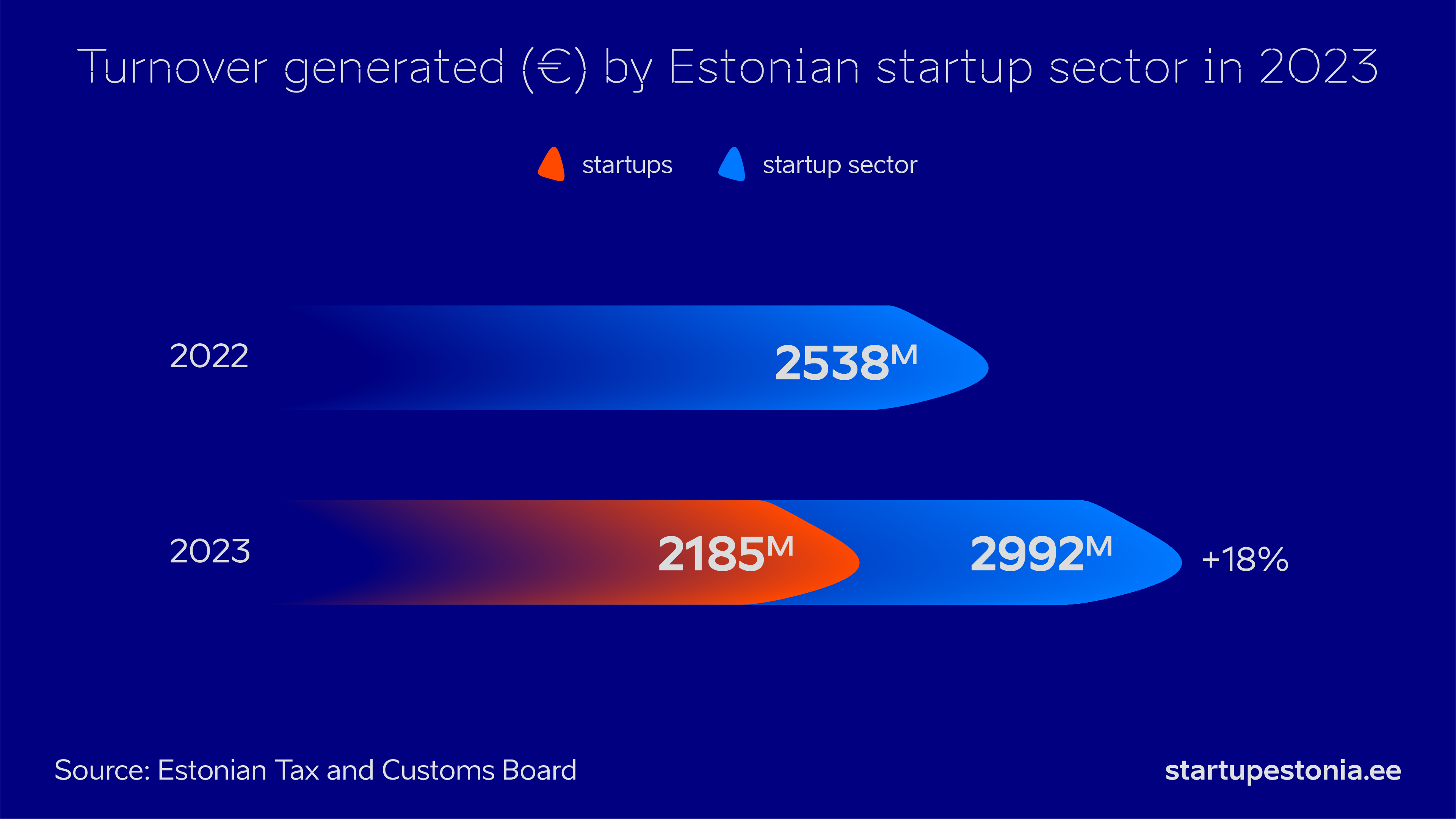
Based on the quarterly data from the Estonian Tax and Customs Board, companies in the startup sector had a turnover of 2.992 billion EUR, an increase from 2022 with 2.538 billion EUR.
Startups were responsible for 73% of this turnover, with growth companies also influencing the overall figures with 27% impact. Notably, Bolt led with a substantial portion of the sector’s turnover with 1,2 billion EUR, followed by Pipedrive (293 M EUR), Veriff (68,2 M EUR), Sunly (53,6 M EUR), and Boku (53,5 M EUR), showcasing the diverse contributors to Estonia’s economic fabric within the startup ecosystem.
Please note that turnover data is published based on the quarterly data from the Estonian Tax and Customs Board and therefore is not comparable with companies’ financial year annual reports data.
Investment pulse in the Estonian startup ecosystem
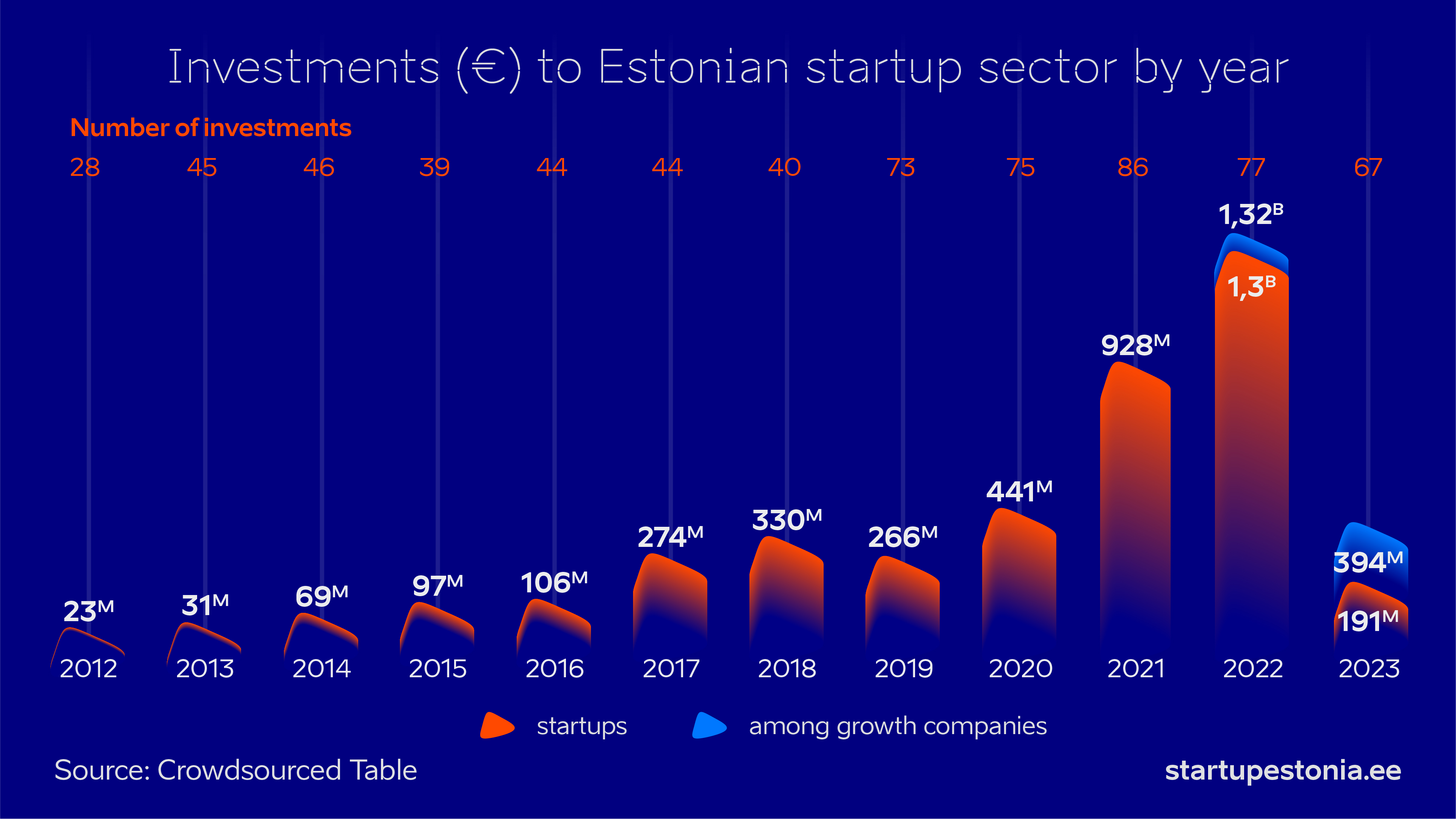
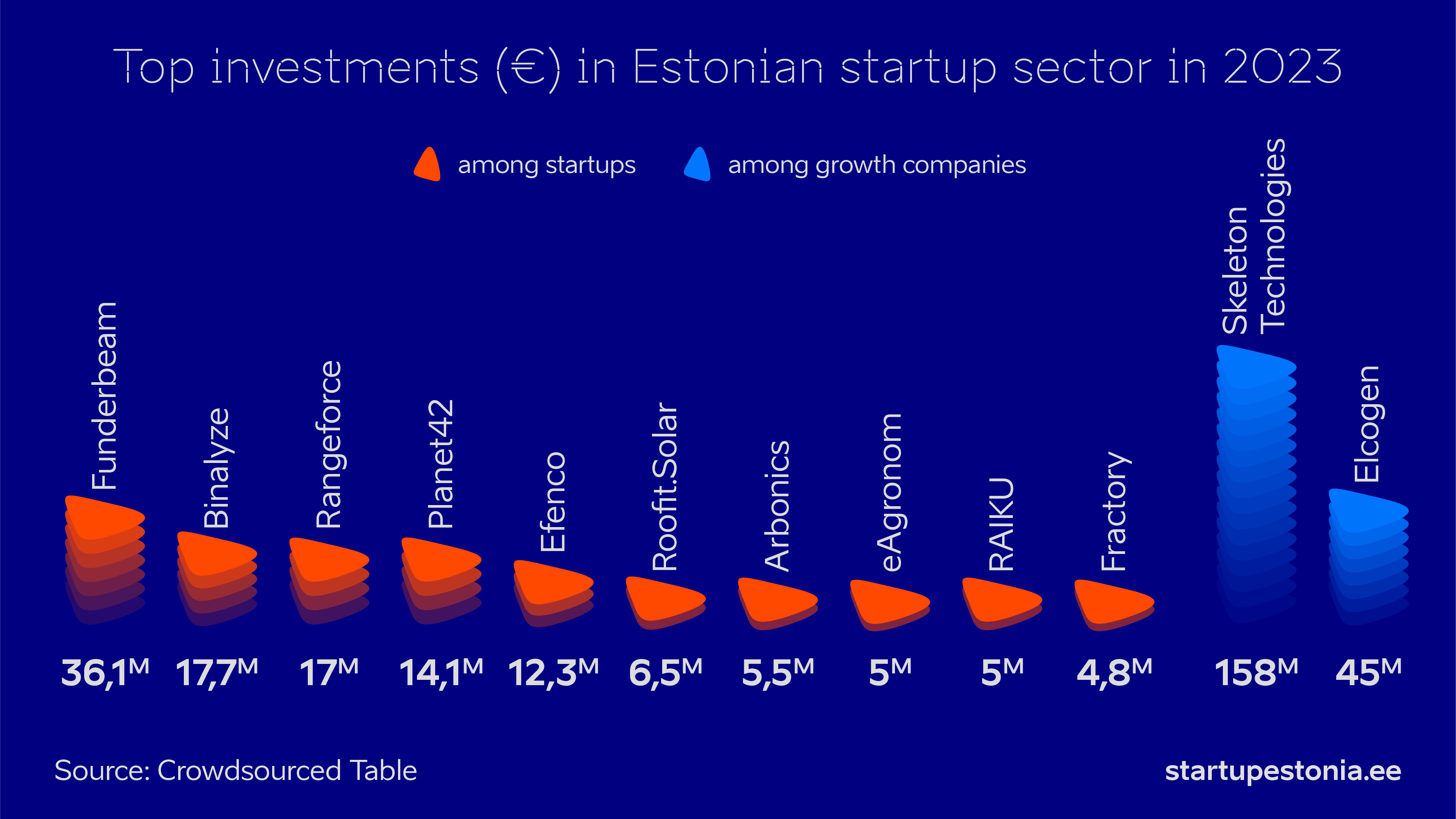
In 2023, based on the crowdsourced table, the Estonian startup sector attracted 394 million EUR across 70 new investment deals. 40 of these deals exceeded 1 million EUR. The growth companies like Skeleton Technologies (158 million EUR) and Elcogen (45 M EUR) led the top with significant investments, followed by startups Funderbeam (36,1 M EUR), Binalyze (17.7 M EUR), and Rangeforce (17 M EUR) raising the next significant rounds. 2023 marked a year of normalized financial injections from the previous two years with incredible peaks yet giving possible growth opportunities within the ecosystem.
In 2023, investments in the Estonian startup landscape were notably concentrated in the energy, transportation, and security sectors. This trend, identified by Dealroom’s heatmap, underscores the growing interest and financial backing in these critical areas, reflecting evolving market demands and innovation priorities within the Estonian tech ecosystem.
Exits in the Estonian startup landscape
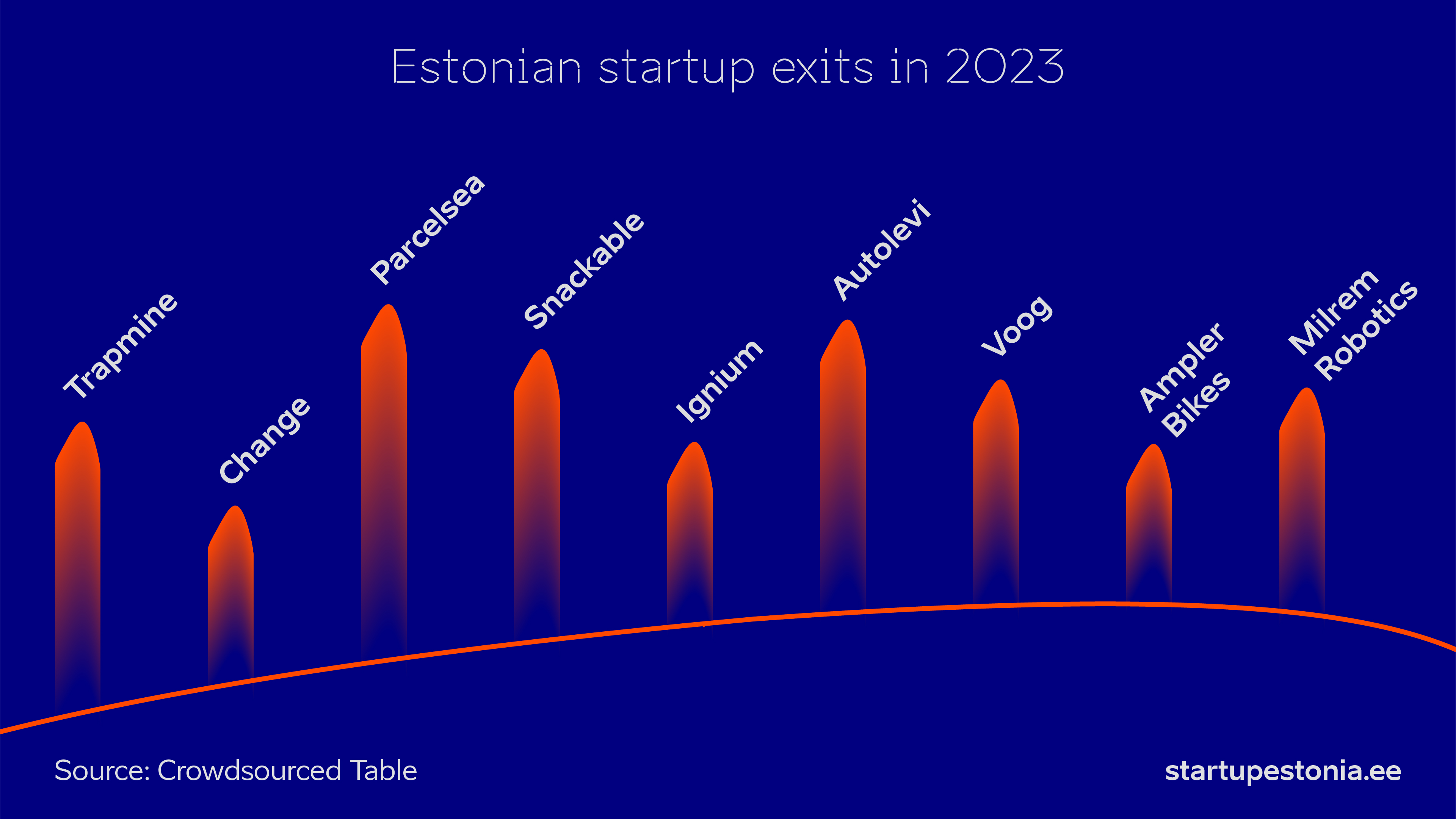
2023 marked a significant phase in Estonia’s startup ecosystem with many impactful exits. The landscape saw nine major acquisitions, including Kõu Mobility’s strategic move for Ampler Bikes and Coinmetro expanding its footprint with the acquisition of Ignium. The acquisitions continued with EDGE taking over Milrem Robotics and Forus integrating the car-sharing service Autolevi. When Amazon stepped in to acquire Snackable, global interest showed up, while local Omniva broadened its services with Parcelsea. Furthermore, the domestic market strengthened with TextMagic AS’s acquisition of Voog, Ingmar Mattus’s notable investment in Change, and Trapmine’s successful transition from the Startup Wise Guys portfolio, reflecting a year of dynamic growth and strategic collaborations.
Startup sector and the GDP
In 2023, the estimated share of Estonian GDP contributed by the startup sector was 2,2%, while the ICT sector accounted for 6,7%. Combined, these sectors constituted 7,2% of the GTP. Compared to the previous year, there has been a slight increase (0,3%) in theit share of the GTP. This shows that these sectors play a crucial role in driving economic growth and innovation.
Summary
While 2023 has been a test of our resolve, it has also been a testament to our resilience. Despite challenges like the availability of top talent, rigid immigration restrictions, and the cooling of the investment climate, the sector has, against all odds, been able to remain vital to the economy. By adapting strategies and valuing high-impact talent, startups not only stabilized their turnover but also increased their contributions to employment taxes to the state.
Allan Martinson, President of the Estonian Founders Society, summarizes it well:
2023 demonstrated again the remarkable resilience of Estonia’s tech sector. It continued with solid growth against the backdrop of overall economic decline. While the birth rate of startups went down a bit, it never stopped, and I am sure some of the next unicorns got their foundation last year. Also, most startups found ways to survive even when new funding dropped thrice by increasing sales and efficiency. We saw only one major company going down, unrelated to the economic climate. To sum up, the tech sector remains the engine of Estonia’s growth.
Estonian startup ecosystem continues to mature, learning from each challenge and turning obstacles into stepping stones. This is our nature and nurture. As we look ahead, we hear the sectors’ optimism for the future, ready to embrace new opportunities and continue our journey of innovation and growth. Driven by our shared vision for an innovative Estonia, we move forward with purpose and determination.
Authors: Moonika Mällo and Ettie Mikita (both from Startup Estonia)
Sources: Startup Estonia, Statistics Estonia, Estonian Tax and Customs Board, Dealroom, Funding of Estonian Tech Startups #estonianmafia
Startup Estonia is a program under Enterprise Estonia that develops the Estonian startup ecosystem. The Startup Estonia program (project number 2021-2027.1.03.23-0212) is financed from the funds of the European Union.